
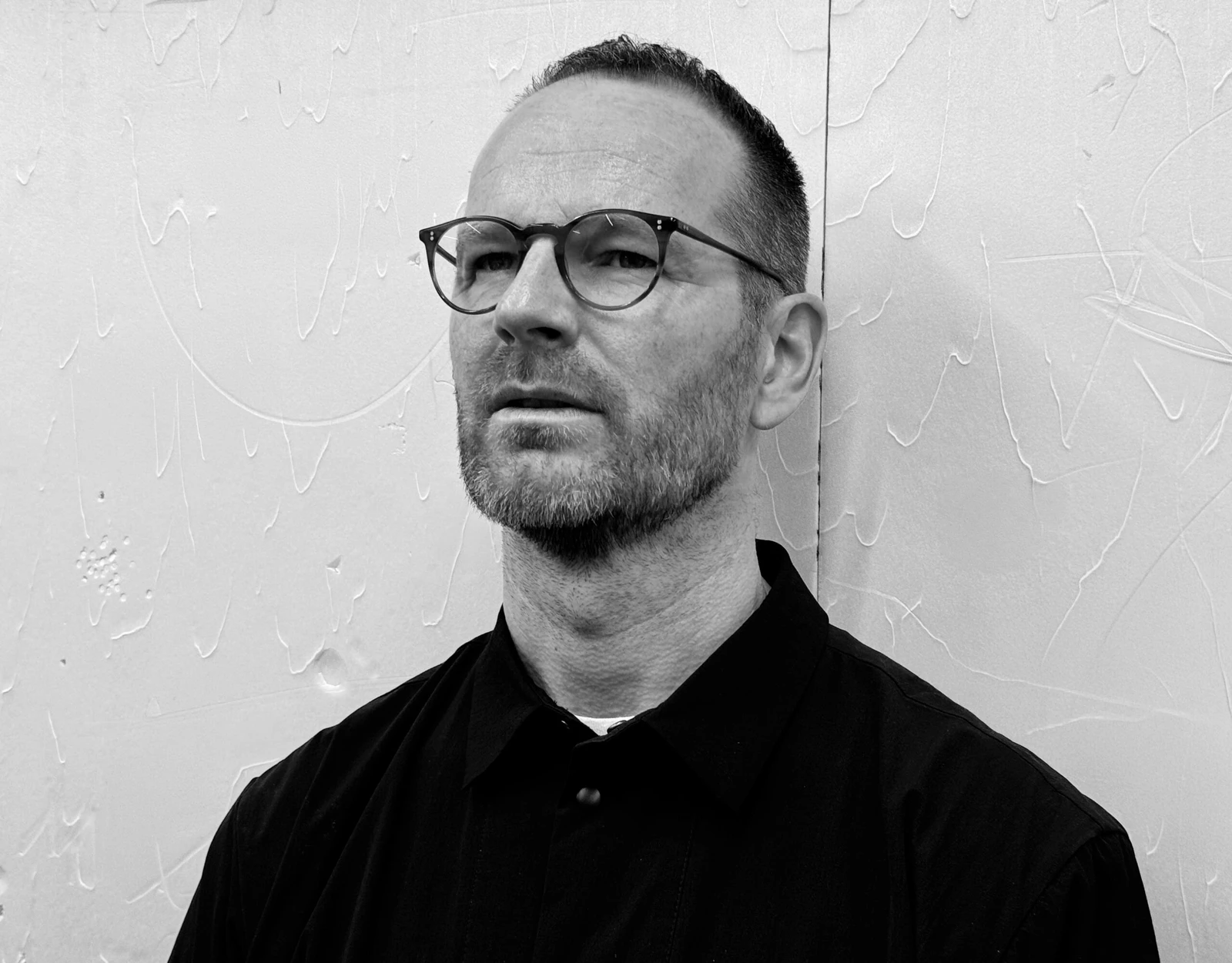
A Portrait of Joachim Trier
Joachim Trier
Writer & Director & Producer
Reprise (2006)
Oslo, Augst 31st (2011)
Louder Than Bombs (2015)
Thelma (2017)
The Other Munch (2018)
The Worst Person in the World (2021)
Sentimental Value (2025)

Awards ve Nominations
67 Wins , 119 Nominations
At a time when the Greenland crisis between the United States and Denmark is escalating, it is intriguing that the Danish-Norwegian director Joachim Trieer is making an American landing with his 2025 film Sentimental Value. Especially when his films have entered the Criterion Collection this year; when his laughter caught by a split screen at the Golden Globes as a reaction to one of Judd Apatow’s absurd jokes has circulated widely and when on the NYFF talk stage, his attitude beside Noah Baumbach has seemed almost more American than Baumbach’s own, as if he were on the verge of conquering the continent. Even as political tensions rise, Trier’s star in the cinematic arena appears set to keep shining. Beginning with his debut feature Reprise in 2006 this twenty-year journey can hardly be described as either short or unplanned.
Meanwhile, Immigrant Song plays in the background.
We come from the land of the ice and snow
How soft your fields so green
Can whisper tales of gore
Of how we calmed the tides of war
We are your overlords
I want to bring the idea of an American-like stance into a more personal area. When I think of arthouse directors, certain familiar types come to mind. We tend to define them first by their intellectual depth and the charisma that grows out of it. Beyond that, they often resemble either a world-weary, eccentric, mischievous bad boy, or an introverted, pensive, melancholic recluse. Joachim Trier fits neither category. When you watch him speak, the first thing you notice is his ease and extroversion. Unlike those who speak by pausing, brooding, or arguing, Trier talks with an optimistic voice that comes straight from the surface, as if he were chatting beside a friend. He can say, without irony, that he felt a Tarkovskian sadness at the death of one of the trucks in a Transformers movie or he can talk about trauma without the weight of the subject registering in his body or his voice, sounding as relaxed as if he were describing the cereal he ate for breakfast.
Given that Trier and I belong to the same generation, extending this personal perspective feels inevitable. I believe that sharing a generation with a director creates meanings and resonances for the audience that differ from those formed with others. Like language, religion, and culture, the period in which one’s childhood and youth unfold is a determining factor in the meanings carried by a film. In fact, it may be even more influential than most. Even if we share the same language and culture with someone growing up today, our equipment for watching the films they make in the future will likely be far thinner than it would be for watching a director of our own generation working in another country. And so, when watching Joachim Trier as a director who came of age in the 1990s, that shared ground always makes itself felt.
Shifting to a broader axis, Trier’s central concerns in cinema can be read vertically as memory, space and human relationships and horizontally through time. Perhaps because his childhood was spent in Oslo, Trier says he conceives of time not as a seasonal cycle but as a linear, irreversible arrow. The memory formed alongside time, the subjective meaning space acquires through the lens of memory, and the effect that space, as distance exerts on human relationships all stand out. Trier is one of the directors who has fully grasped cinema’s power at this point. Put differently, we cannot see a person’s past, memories or thoughts within the frame itself, we can only try to see and understand them through the way scenes are edited together. Sometimes this takes the form of a memory tied to a place, sometimes the shared state of mind that envelops not only the speaker but also the listener during an intimate confession. As each scene is linked to the next, the film can tell us something about memory, space and ultimately about the human being in relation to both and to others, something we may never have heard before, or perhaps more strikingly, something we have always known. Perhaps for this reason, Trier says that when everything in life feels empty and meaningless, he opens old classic films, usually a Tarkovsky film and finds there a truth more meaningful than what he sees in real life, a truth that reminds him anew.
If I continue along the plane of time and human relationships I return once more to the generational bond I feel with the director. Intergenerational relationships are particularly striking, especially when first and second-degree ties are involved. Here it is essential to mention Eskil Vogt, with whom Trier has co-written all six of his features, and Olivier Bugge Coutté, who has edited his films, not only because of the twenty years they have spent together but because each has exerted a decisive influence on Trier’s cinema. Vogt is a filmmaker of the same generation, shaped by the Scandinavian milieu. Among the shared traits visible in their scripts are atheism, Freud, and the indirect effects of the Second World War. When Trier speaks about these influences in his own voice he also emphasizes the parallel trajectory from where he and Vogt began to where they stand now.
Olivier Bugge Coutté, who has been by Trier’s side since his short films, brings particularly delicate touches to memory. Working with a logic of memory rather than classical dramatic continuity, this editing approach makes sudden temporal jumps feel not like cuts but like acts of remembering, forming the basis of that sensation of intuiting a character’s past within a scene. A clear example appears in Louder Than Bombs from 2015, in the scene where Conrad, the emotionally fragile brother, listens in class to the girl he loves reading aloud, and his mind drifts back to the moment of the accident in which his mother died. The journey into memory begins with voiceover, while the sound heard in real time continues to accompany it, capturing the movement of remembering and stream of consciousness at its core.
It is also worth noting that Trier spends long hours getting to know his actors, shaping certain parts of the film around them like a tailor fitting a garment on a model and that he always arrives on set thoroughly prepared with ideas about script and cinematography. For some directors, this level of planning can make their cinema feel artificial, and at times this is an actual risk that can be sensed in Trier’s films as well. But Trier is keenly aware of it and deliberately makes room for improvisation, or as he calls it, jazz. A famous example occurs in Oslo, August 31st from 2011, in the bench scene where two friends sit together. Anders laughs as he says everything will be fine, then adds that it actually will not, his eyes filling with tears. After repeated takes, Anders was exhausted and slipped into the same lostness that his character cannot escape, and in that moment something spontaneous emerged, unscripted and improvised. It would not be an exaggeration to say that this scene lifts the film to another level. In short, Trier understands the value of those spontaneous yet unforgettable things that happen amid our collective obsession with control, and he does not hide the pride he takes in capturing them on film.
The evolution of Trier’s core team over the years leaves us, in his latest film, with a more mature work than those at the beginning of the road. Sentimental Value addresses both Trier’s relationship with earlier generations in his own family and his generation of filmmakers’ relationship with the one that preceded it. In this sense, the film is shaped around intergenerational bonds, more often conflicts, unsettled accounts, confrontations, and perhaps acceptances, perhaps acts of forgiveness, both personal and professional. I imagine that the long conversations about the past and its traces in the present that Trier and Vogt had while secluding themselves in a house to write the script resembled the intimate talks we have with our own friends, the epiphanies we experience, the moments of recognition that are transformed into cinema in their hands.
There is always a first moment when we decide whether we like a film. Even if that judgment changes as the film unfolds, that moment often becomes the scene that comes to mind first when we think back on it later. In this respect, films resemble people. When I think of Sentimental Value, the opening sequence is the moment when I first sensed I would love the film. The narration, woven from the fabric of childhood memory, speaks of the house’s loneliness, the changing seasons, a house that behaves like a living being, growing heavy with arguments and light with abandonment. It bears the traces of the period when Trier’s own childhood home was sold. Just as the father character Borg writes that he wants a home in the script, Trier has spoken of not having a fixed home in childhood, and of the house he considered stable, the one he shared with his grandparents being sold while they were writing the screenplay. When asking how we say goodbye to our childhood homes, I can see that Trier’s farewell takes place through this film.
The emotional intensity felt here can sometimes be a risky terrain for a film. Just as excessive planning, technique, and formalism make a film feel artificial, so too can an excess of emotion leave it breathless. Like an understanding of music that counts silence as a note, Sentimental Value creates breathing spaces through ironic pauses when emotion swells. Emotional depth is a sensitive area for Trier as well, and he speaks of approaching it with particular restraint. Not coincidentally, his words align perfectly with the concept of new sincerity that began to be defined in the 1990s. He grew up in the nineties, comes from irony but with this film needed to talk about intimate, more tender things. That matters to him now, and he does not want to be ashamed of it.
Since we have begun discussing the risky zones of Trier’s cinema, it is also necessary to address his female characters, which until his latest film were its greatest weakness. Especially in his early work, women are either two-dimensional, shallow, and insignificant, or hysterical and selfish. There is little to say about the former. As for the latter, this perspective drew criticism for a long time. In Thelma, it is striking that while the father refuses to kill his daughter to end the witchcraft-related evils, it is the cold, distant figure of the mother who convinces him. In The Worst Person in the World, Julie is a woman who, in her run to search for her place in life, often quite literally, disappoints the expectations of men who want love and commitment from her. In this view, women are characterized as if they have traded their loving, nurturing nature for freedom. Perhaps the clearest example appears in Louder Than Bombs in the mother character Isabelle, a world-famous photographer who places her career at the center of her life and remains physically and emotionally distant from her family. The void created by her inability to provide the closeness her children need is filled by the father Gene. Once again, we encounter a pairing of a cold woman in pursuit of freedom and a compassionate man. Whether this is coincidence remains open. Although there are strong reasons to suspect that Trier’s relationship with his own mother has played a role here, no explicit confession supports this.
The maturation of Trier’s female characters in Sentimental Value appears to mark a significant turning point. The character of Nora bears none of the exclusions or distortions described earlier. The relationship between Nora and her sister is one of the film’s strongest dimensions. On the other hand, because mothers in the film appear only faintly, almost between presence and absence within memories, it seems that Trier’s reconciliation with his own mother may be reserved for another film.
In the end, Trier’s cinema still postpones certain confrontations, especially where mothers are concerned. Watching the unresolved accounts, the unspoken, and the unfinished in Sentimental Value, the latest stop in his twenty-year feature-film journey, one cannot help but think that perhaps not every film has to open every door. Sometimes a film simply moves us from one room to another.
Author: Zeynep Bakanoğlu
