Simón Mesa Soto
Comedy | Drama | 120′
Colombia | Germany
Ubeimar Rios | Rebeca Andrade | Alisson Correa
Awards & Nominations
9 Wins, 4 Nominations


A Poet: A Declaration of Artistic Critique at the Breaking Point of Reality
Simón Mesa Soto’s A Poet (Un Poeta) follows the life of a fragile, melancholic—perhaps even “useless”—poet drifting through the streets of Medellín, Colombia. The film opens with a portrait of Óscar Restrepo, a man haunted by the ghost of his once-productive youth: someone who has lost faith in his own ability to create, who carries the weight of the years on his shoulders, still dependent on pocket money from his mother, slowly decaying beneath the silent rot of his own failure.
Óscar Restrepo exists at the center of a life woven with alcohol, loneliness, and disappointment. Unemployed and devoid of any desire to work; burdened by a divorce; estranged from his daughter; crushed by the financial and emotional dependence of his elderly, ailing mother—Óscar struggles to reckon with both his past and the absurd expectations attached to being a poet.
As his days drift between insecurity and unmet ambitions, the arrival of a young student—Yurlady—ushers in a shift. Through her, Óscar’s fantasies of creative production transform into a desperate attempt at self-actualization.

Premiering at the 2025 Cannes Film Festival in the Un Certain Regard section—where it won the Jury Prize—and selected as Colombia’s Oscar submission, the film has drawn attention for its technical precision, cleverly satirical screenplay, and bold critical edge. Soto’s work is not merely the tale of a poet’s exhaustion; it is a calm yet sharply observed, satire-laced intellectual journey into the question of who shapes art, and under what conditions.
When director Simón Mesa Soto found himself on the verge of quitting cinema after his debut feature, he began imagining “the worst version” of himself—a traumatic hypothetical that became the seed of this screenplay. This detail turns A Poet into more than just a character study; it becomes a deeply reflective, meta-critical declaration on art and the artist’s identity. Through A Poet, Soto constructs a cinematic universe that not only depicts an individual tragedy but also projects an allegorical reflection of his own creative crisis, professional burnout, and confrontation with the conditions of artistic production.
As Óscar grapples with the pain of the creative process and the turmoil of his personal life, his meeting with the young and gifted Yurlady becomes an escape from the regrets of aging and the torment of being unable to create. Yet his efforts to support Yurlady’s potential quickly transform into a transactional, self-serving dynamic that is far from mentorship.
Mockumentary Texture: An Aesthetic That Fractures—and Deepens—the Sense of Reality
Soto’s camera observes the growing intimacy between the pair with a documentary-like sensibility—sometimes impulsive, sometimes distant and objective. The relationship that forms between Yurlady and Óscar is less teacher–student than it is a strange equilibrium of need, lack, desire, attention, and mutual benefit. While the film follows an unproductive poet’s attempt to discover and uplift a young talent, it also reveals how a young girl’s voice is drawn into—and reshaped by—political, aesthetic, and class-based power structures.
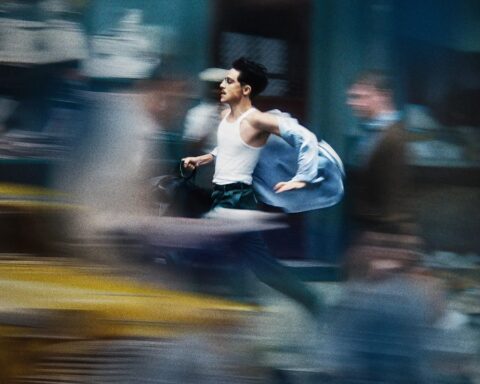
Simón Mesa Soto’s perspective places him not only as a storyteller but also as an implicit critic. At times, his camera trails his characters with an impulsive hand-held immediacy; at others, with a distant, observational neutrality. Shot over roughly 30 days on Super 16mm and performed by amateur actors (notably the non-professional playing Óscar—who is the uncle of the director’s friend), the film gains a textured and tender sense of authenticity.
These technical choices—hand-held movements, sudden zooms in and out, and a documentary-like narrative language—coalesce to give the film a distinct mockumentary texture. The light, noise, heat, and harsh reality of Medellín are reborn in the grain of Super 16mm; the rawness of the streets clashes within the same frame with the art world’s idealizing gaze. This texture intentionally fractures the viewer’s sense of reality, instilling the impression that what appears on screen is a fragment of life itself.
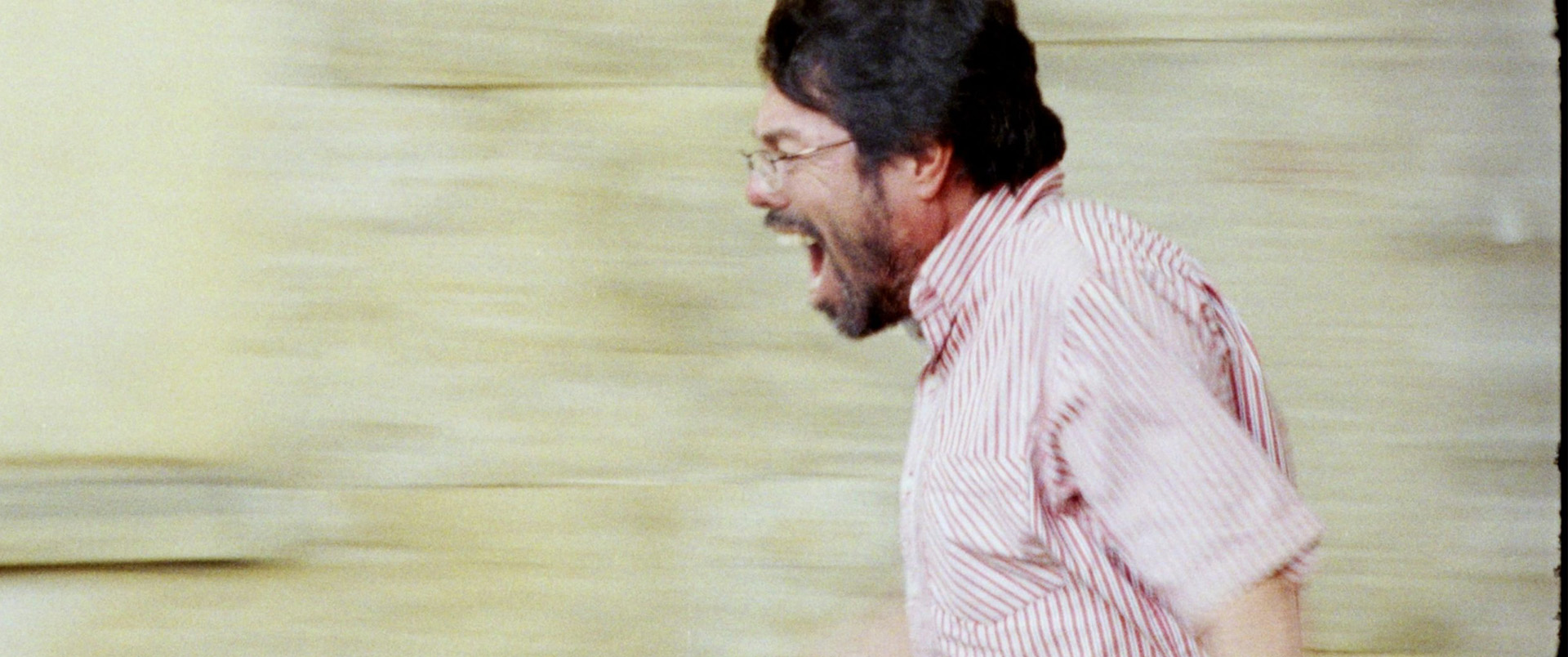
This visual rupture aligns perfectly with the film’s core theme: A Poet weaves a story suspended between humor and tragedy, reality and fiction, disappearance and creativity. Soto’s remarkable cinematography gravitates toward both Óscar’s melancholic solitude and the strange balance of need, lack, desire, and mutual benefit that defines his dynamic with Yurlady. The film not only depicts an aging poet’s attempt to rediscover creation through a young talent, but also exposes how that young girl’s voice becomes entangled in—and reshaped by—political, aesthetic, and socioeconomic forces. In every frame, the raw reality of Medellín collides with the idealism of art; absurdity, tragedy, and humor fuse with deliberate mastery.
The Political Commodification of Art: The Exploitation of Yurlady
Soto’s sharpest critique is constructed through the talented high school student Yurlady, who comes from a lower-class background. Yurlady’s poetry is genuinely powerful; yet European funders, Colombia’s elite literary circles, and the art world controlling cultural capital claim her work only insofar as it aligns with their political interests. They even exert pressure on the young girl to make it conform. Yurlady’s artistic practice is immediately co-opted by Colombian elitist poets and European patrons, forced onto a political stage.
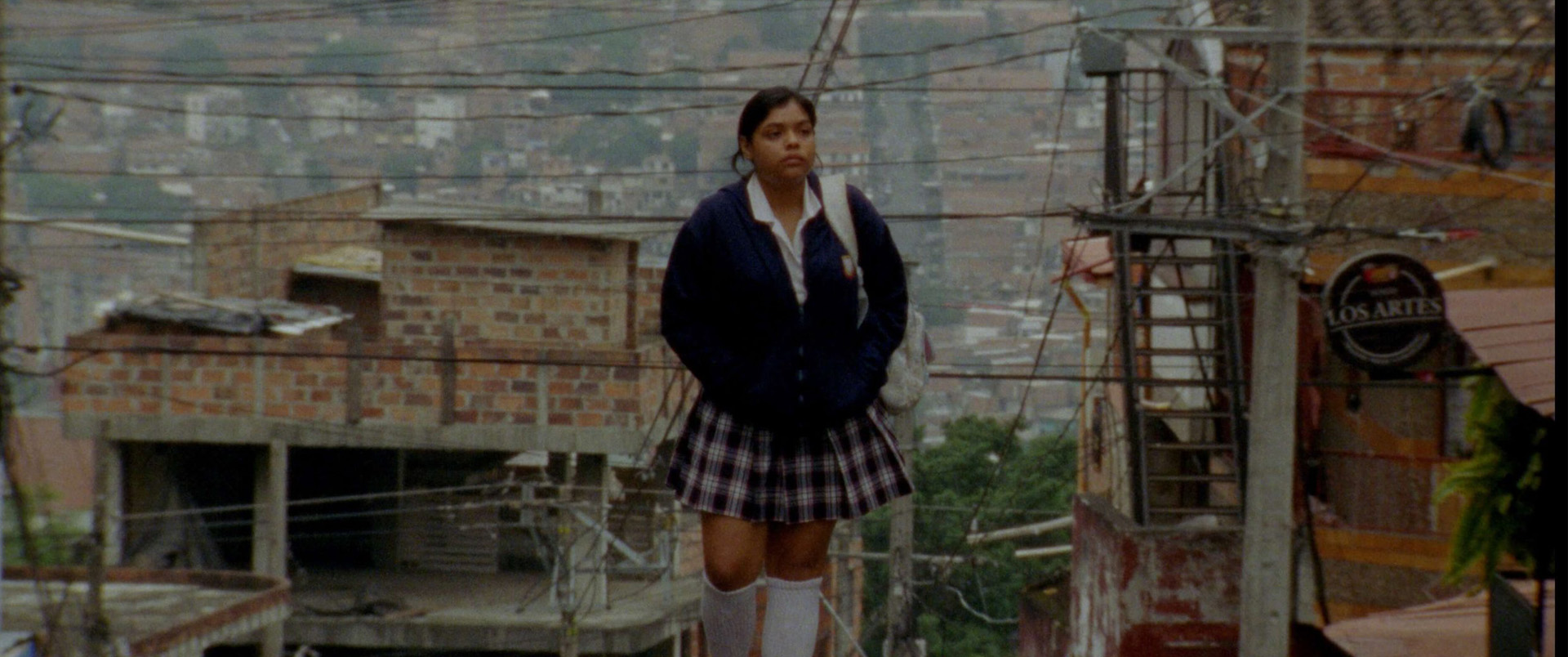
The interpretation of Yurlady’s work through political codes—her skin color, socio-economic status, and the inequalities in education and income—creates an irony that reveals how art is commodified not for its aesthetic value but through the lens of a “marginalized” identity. What is expected of her is not “good poetry” but rather a dramatization of her disadvantaged circumstances. Here, the film demonstrates its mastery: Soto constructs his critique not only through the narrative but through the entire visual and narrative texture of the film.
By positioning Yurlady as a poor girl and simultaneously applauding her from that position, the system both marginalizes and romanticizes her. This is where the irony is at its sharpest: Yurlady is celebrated not for existing, but for being a “victim.” The more she embodies disadvantage, the more wildly she is applauded within artistic circles. This is, in fact, a perfectly reasonable and coherent starting point for the film; yet the relationship never takes a step beyond this foundation, remaining confined to that initial framework.
Óscar’s Melancholy and Creative Inadequacy
The film’s second critical thread is woven through Óscar’s character. Óscar is a poet, yes—but in reality, he is merely a man trying to be a poet. Not a father. Not a son. Not a full adult. And, perhaps most importantly, not a producer of anything at all.
Óscar lives as if inside a novel, a poem, or a film, trapping himself entirely within a performative artistic identity. He abandons the responsibilities of real life, elevating the idea of “being a poet” into a quasi-divine protective shield. Parasitic dependency, constant melancholy, and chronic inability to produce—all these elements form a shell that lets him rot in his chair.
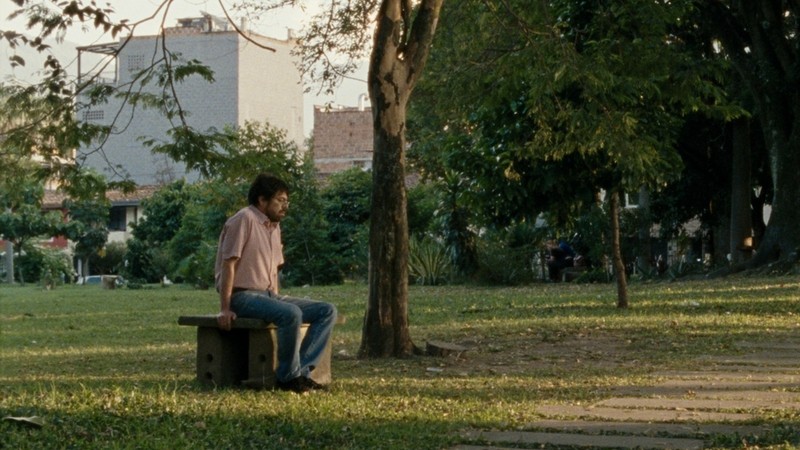
Then comes Yurlady… Óscar attempts to compensate for his own creative impotence through her, using the young girl’s talent as an escape route from his own mediocrity. This is one of the film’s most ruthless yet accurate observations: the failed artist striving to realize himself through another.
Yurlady’s Character Development Remains Superficial
It is admirable how the film constructs this holistic critique—not only through its subject matter but through every camera movement and atmospheric choice. However, the depth of the central interpersonal relationship at the heart of such a sharp critique unfortunately does not reach the desired richness. While a connection between them is suggested, it mostly functions through economic exchanges: Óscar provides for Yurlady’s needs and desires, but the emotional layers remain limited. (This is quite reasonable and logical for the beginning of the film, but it does not take a step further.)
Yurlady, in contrast, is a child often overlooked by her family, forced to take on parental duties for her older sister’s children, eager for attention yet cautious. The interest, support, and sense of being “seen” that Óscar offers—even if unhealthy—could have developed into a far stronger bond for a fifteen-year-old in her situation. The film hesitates to exploit this potential.
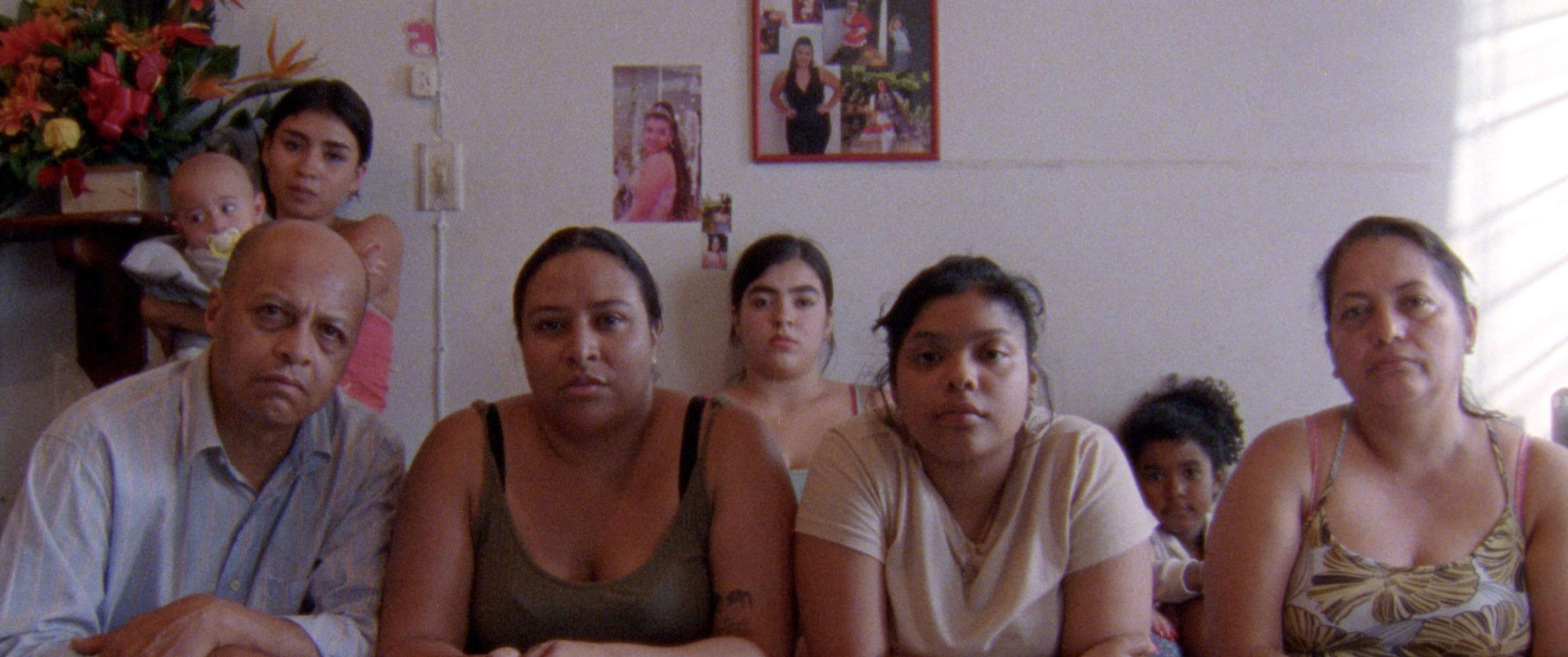
For Yurlady—a fifteen-year-old largely ignored by her family and responsible for caring for her nieces and nephews—Óscar’s attention, although not entirely healthy, carries a quasi-paternal quality. It could provide a meaningful connection by addressing both her needs and her deserved desire for childlike attention. The film’s decision not to delve more deeply into Yurlady’s emotional needs and vulnerability limits its ability to balance its critical framework with emotional tragedy.
Conclusion: Ruthless, Funny, Real, and Highly Effective Artistic Critique
A Poet emerges as one of the sharpest and most entertaining recent films critiquing the art world’s hypocrisy, the pressures of production, artistic egos, and the trade of cultural capital. Through Óscar and Yurlady, Simón Mesa Soto channels his own fears, potential for failure, and the systemic constraints of filmmaking into a striking cinematic language. The film’s documentary-like visual world, along with its deliberate fractures of perceived reality, emphasizes that these critiques are not confined to a fictional universe—they target the very system and society we inhabit—reinforcing the film’s manifesto-like power.
Author: Zehra Eda Sert