Bi Gan
Drama | Sci-Fi
China | France
Jackson Yee | Shu Qi | Mark Chao

Awards and Festivals
15 Wins, 41 Nominations

“All worlds, whether invented or not, are equally real. And therefore equally unreal.” Yiyun Li, The Book of Goose (2022)
As cinephiles there are usually two reasons why we follow a director. The first is that one or a few of their films – often their debut feature – have managed to capture us deeply. That initial peak can become limiting. The possibility of never surpassing that film often pushes directors toward repetition or worse toward a gradual loss of their essence. The vast graveyard of cinema is filled with once-celebrated directors who have lost their brilliance, and with us who return to their early films, visiting with a certain melancholy.
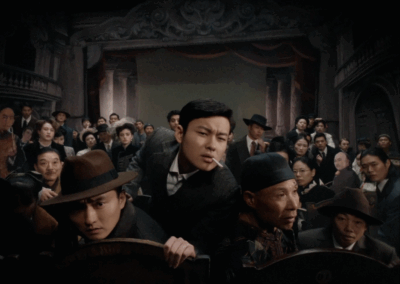
The second reason is the promise offered by a director whose style and perspective continue to evolve: “I will make a film unlike anything you have seen before.” What begins as a spark met with skepticism slowly grows into a fire with each new film. Bi Gan is one of those directors on the radar of cinephiles waiting for that fire. With his first two feature films, he has already gathered a near-cult following.
It is often said that Kaili Blues (2015) and Long Day’s Journey Into Night (2019) reshape our perception of time, space, and dream. His cinema moves away from narrative clarity and instead operates through experience and intuition, either pulling you into its world or leaving you completely outside. His third feature, Resurrection, can be approached from this perspective.
We can describe Resurrection, which had its world premiere at Cannes, was screened at the Istanbul Film Festival, and received the Special Jury Prize at both festivals, as a film that places a passion for cinema directly at its center. I would simply call it a love letter to cinema. While its English title point to rebirth and immortality, its Chinese title, “Kuáng yě shí dài” or “Wild Times,” recalls that ironic phrase “may you live in interesting times” suggesting a world where logic dissolves and time loses its meaning.
From the very first minutes one question kept circling in my mind:
“What kind of machine is working inside this man’s head?”
Bi Gan’s cinema really does resemble a timeless, noisy, and complex machine. Everything he feeds into it, images, emotions, intuitions, sounds, memories, dreams, fables, gets crushed between its gears and reshaped. Think of Wong Kar-wai’s neon-lit cities where time seems suspended, his artificial colors, childlike lovers and strange gestures. Think of Tarkovsky, or the last dream you had. Both lead to the same place. A dream carries its own past, both yours and not yours. In a dream, you seem to see and know everything at once, what lies ahead and what lies behind. Sometimes a color evokes a feeling, sometimes the feeling arrives before the image. When you see a scene like this, you immediately recognize it as a dream, because you have already been there. Tarkovsky felt like a prophet from that world, with both believers and skeptics. Bi Gan is one of the believers.
In his latest film, he feeds all of this into his machine. On top of it, he adds fragments from his own culture and history, bits and pieces, screws, flowers, milk, black pepper, things that seem unrelated or impossible to associate. Then comes smoke. Then noise.
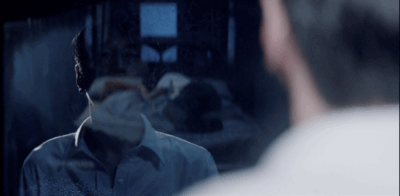
The film is structured in six chapters that loop back to the beginning, moving across different eras of twentieth-century cinema: an opening in the aesthetics of silent cinema, a fragmented neo-noir spy story, a fable set in a snowy Buddhist temple, a moral tale revolving around gambling and fraud, and a long take unfolding over a pre-millennium night. Each of these sections also corresponds to a sense. The silent cinema section privileges image alone. Then comes sound in the noir segment. The temple sequence clearly invokes taste. Another story aligns with smell. And finally, touch emerges in a love story.
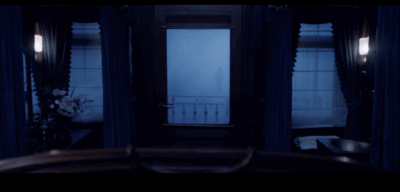
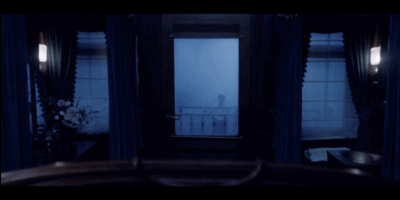
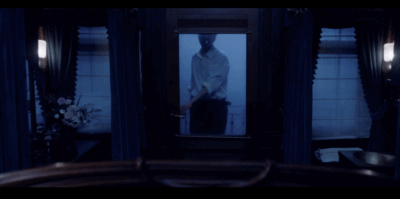
Each section may feel like it belongs to a different film, yet they are all products of the same machine. It soon becomes clear that this machine is, in fact, conceptual cinema itself.
In the opening scene, as the audience watches the screen, the figures on the screen look back at the audience. It is as if Bi Gan is saying:
“I am a freak, a cinema freak. You are too, and this is your story.”
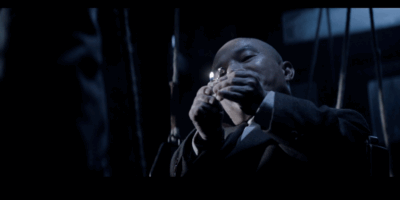
Even though he has described this as the least personal of his three films, it is impossible not to notice his passion for cinema reflected throughout. That initial encounter holds the promise of turning the film into an invitation rather than a narrative.
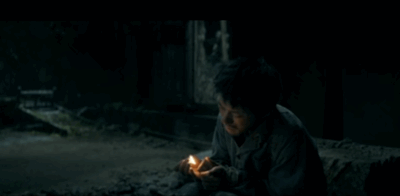
Visually, the film evokes the illusionistic aesthetics of early cinema, recalling Georges Méliès. As if Méliès had built his stage in China. Perhaps similar scenes existed there at the time. From the beginning, Bi Gan reconnects the viewer with his own cultural context.
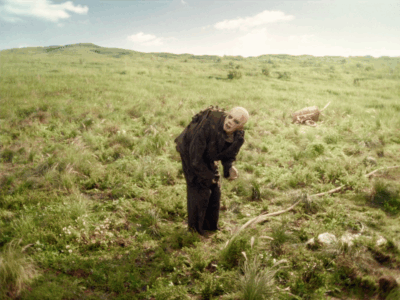
As the film progresses, a gothic tone emerges, along with a creature that recalls Nosferatu. Bi Gan refers to it as the “Movie Monster,” though he has cited the angel in Wings of Desire as a reference. One of the most striking aspects of this section is the blending of live action and animation. By layering images, the film creates effects reminiscent of early cinema, while spaces become unstable, and light, color, and perspective constantly shift. Bi Gan has said that editing is his favorite part of filmmaking. For him, it is where the story is truly told. In Resurrection, he collaborates with editor Pai Pai, a new name in the field.
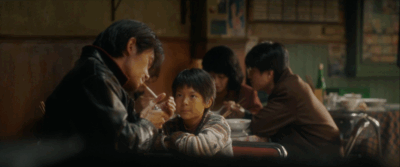
Rather than constructing tightly resolved narratives, Bi Gan seems to follow chains of associations that resonate in the subconscious. He compares cinema to a form of magic, emphasizing that what matters is not the trick itself but the effect it creates on the audience.
Sound design deepens this experience. Listening to Bach BWV 478 played on the theremin, the strangeness of producing sound without touch felt strangely similar to the way cinema affects the viewer.
As the film moves from one section to another, it also shifts from one sense to the next.
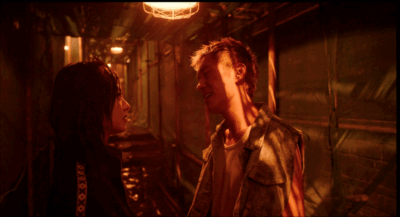
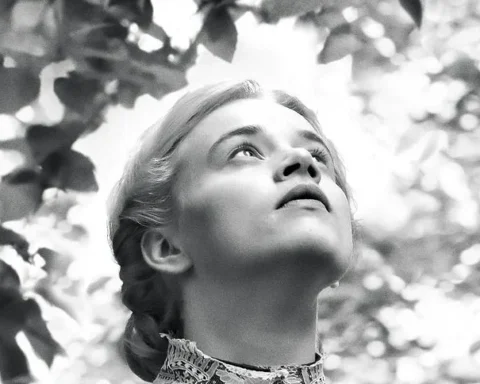
The third section, associated with taste, is dense and evocative. Here, memories, rather than dreams, take center stage. As the story unfolds, we learn that the sacred spirit of pain resides within the protagonist’s aching tooth, taking the form of his father in order to possess him. The cycle of sin and pain embedded in his past becomes something almost tangible, a flavor. While this connection between the mouth and sin draws from ancient Chinese beliefs, it also resonates as a shared human inheritance.
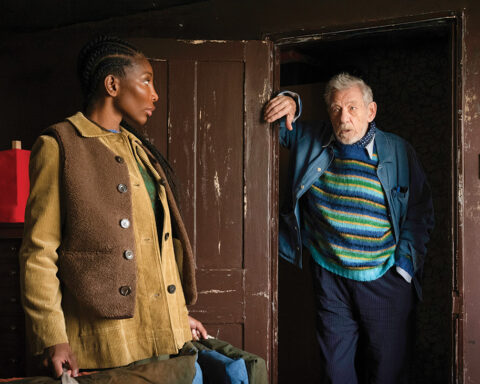
In the section associated with smell, a story of fraud unfolds, where recurring objects like lighters and matches stand out. These objects seem to materialize elements of collective consciousness, dreams, memories and even cinema itself.
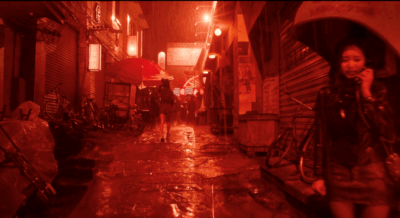
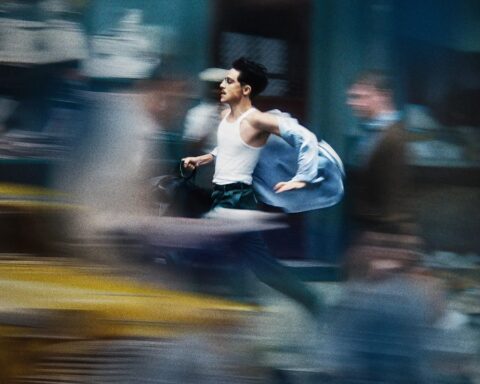
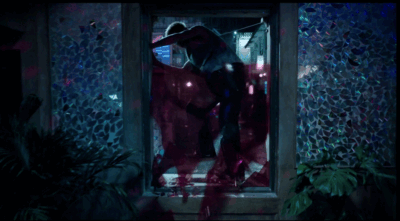
In the final section, we encounter Bi Gan’s signature long take, described by some as unnecessary and pretensious, by others as masterful. Lasting around thirty minutes, the sequence has everything. The camera moves through a port city at night, entering and exiting interiors, drenched in red hues, advancing through rain, interrupted by music, and eventually reaching sunrise.
Bi Gan has explained that filming this sequence took about a month, with only one attempt possible each night during the final week. His aim was to capture the sunrise in real time. The light we see at the end is not an effect, but the actual rising light. This makes the management of light as crucial as camera movement in the success of the scene. His collaboration with lighting director Wong Chi Ming also helps explain the echoes of Wong Kar-wai in the final section. The transitions between interior and exterior spaces, and the way rain becomes visible through light, are remarkable. At the same time, many of the colors were shaped in post-production, with the red tones added later. Bi Gan is not a magician who hides his tricks; he openly shares his methods and the emotions he wants to evoke.
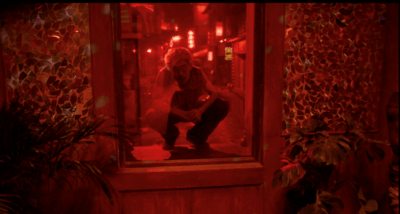
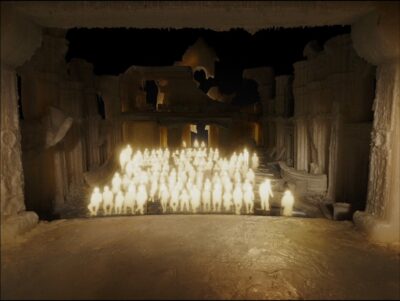
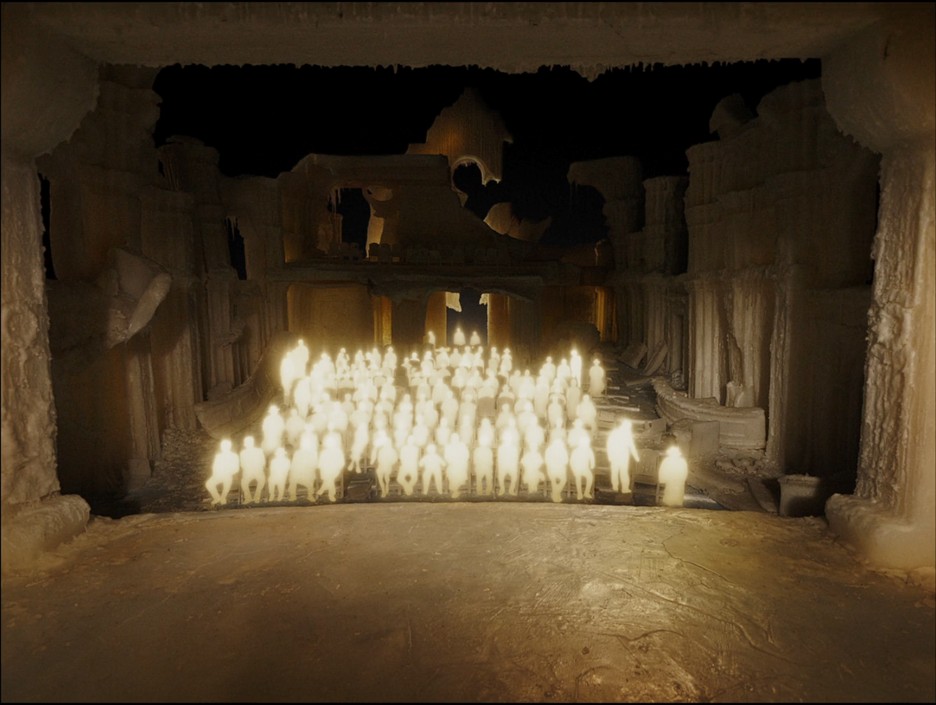
At the end, the final story loops back to the beginning. This can be read as a reflection of a cyclical understanding of time. In a ruined cinema hall where the audience appears as bodies made of light accompanied by farewell words, are we witnessing a moment of self-recognition, like looking into a mirror, or an encounter with the ancient spirits of the cinematic tribe we belong to? The scene remains open to interpretation and powerful in both readings.
Author: Zeynep Bakanoğlu