
HOLLYWOOD FAUST: THE COST OF THE TRANSITION FROM ARTHOUSE TO HOLLYWOOD
Referenced Films
Guillermo Del Toro
- Cronos (1992)
- Blade II (2002)
- Hellboy (2004)
- Pan’s Labyrinth (2006)
- The Shape of Water (2017)
Bong Joon-Ho
- Memories of Murder (2003)
- The Host (2006)
- Snowpiercer (2013)
- Okja (2017)
- Parasite (2019)
- Mickey 17 (2025)
Noah Baumbach
Kicking and Screaming (1995)
The Squid and the Whale (2005)
The Meyerowitz Stories (2017)
Marriage Story (2019)
White Noise (2022)
Yorgos Lanthimos
Kynodontas (Dogtooth, 2009)
Alpeis (Alps, 2011)
The Killing of a Sacred Deer (2017)
The Favourite (2018)
Poor Things (2023)
Bugonia (2025)
Ari Aster
Hereditary (2018)
Midsommar (2019)
Beau Is Afraid (2023)
Eddington (2025)
IV. Fourth Wave: 2000s–Present
Guillermo del Toro’s cinema redefines the monster figure as an ethical and emotional carrier of the marginal. Beginning his career in Mexico (Cronos, 1992), he merges Gothic fairy tale with political trauma, transitioning to Hollywood through genre cinema (Blade II, 2002; Hellboy, 2004). Even within studio projects, del Toro largely maintains control over visual world-building and mythological depth. His cinema expands the conventional blockbuster language emotionally by feeding the mainstream effects aesthetic with childhood fears, historical violence, and loss. Pan’s Labyrinth (2006) and The Shape of Water (2017) represent the apex of his bridging between worlds: one grounded in Spanish-language historical allegory, the other subverting classical Hollywood melodrama. Del Toro is an auteur who negotiates with Hollywood without sacrificing his essence, transforming fantasy from a commercial genre into an ethical narrative space.

Bong Joon-ho, navigating both South Korea and the U.S., is not part of a unidirectional transfer; rather, he is a rare director sustaining production across these two contexts. Class conflict, critiques of capitalism, and pessimistic views on human nature remain central motifs in his films, preserving thematic weight even when stylistically softened. His visual language—camera work, composition, framing, and color palette—varies between films but remains consistently strong and controlled. Notably, distinctions between his Korean- and English-language films are evident: Korean films feature more layered, morally ambiguous characters, while English-language films highlight archetypal, symbolic characters (e.g., Kenneth Marshall in Okja). Similarly, Korean films depict social structures, corrupt institutions, and class tensions through everyday spaces and natural environments (Parasite’s basements, old neighborhoods), while English-language films engage with broader, global capitalism and dystopian critiques, reinforced visually by expanded production design, increased CGI, and more allegorical narrative layers (Snowpiercer, Okja, Mickey 17).

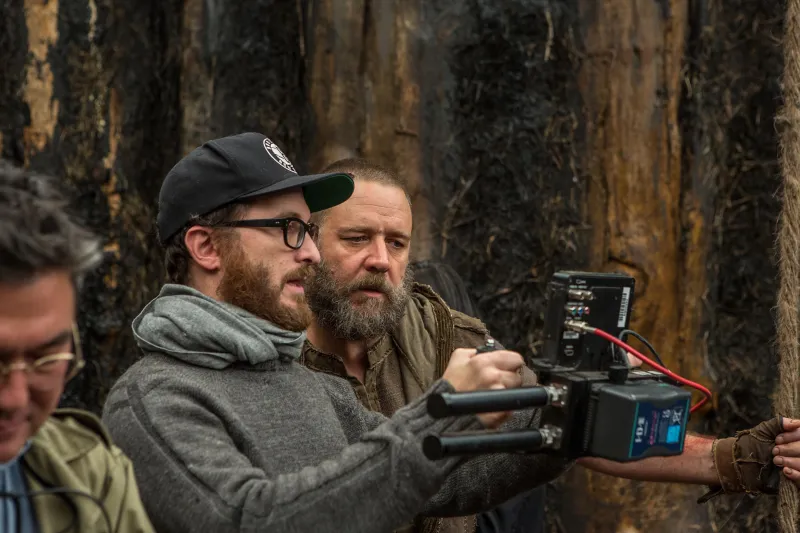
Darren Aronofsky’s early cinema represents one of the most uncompromising explorations of body politics in independent American film. Pi (1998) and Requiem for a Dream (2000) construct narrative through mathematical structures, montage violence, and physical destruction, deliberately displacing the audience from comfort. These films resist “watchability” not only thematically but formally; the narrative makes no pact with viewers—it attacks them. Aronofsky’s originality is precisely in this: cinema becomes an experience demanding a price rather than producing pleasure. With his approach to Hollywood (The Wrestler, 2008; Black Swan, 2010), this aggression does not vanish but becomes disciplined, narratively polished, and adapted to the reward economy. Noah (2014) and mother! (2017) represent the most visible stages of his Faustian bargain: while expanding metaphorical and allegorical dimensions, his formal radicalism largely diminishes. He remains challenging, yet the challenge now exists within the limits tolerable by the system. Aronofsky’s cinema does not entirely lose originality; rather, it becomes an aestheticized, domesticated version that is no longer a sharp threat.
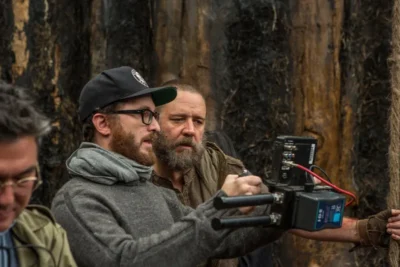
Noah Baumbach’s early films carry a rare intellectual discomfort in American independent cinema. Kicking and Screaming (1995) and especially The Squid and the Whale (2005) portray the emotional inadequacies, narcissism, and ethical blindness of the liberal middle class, maintaining a distant relationship with the audience. Empathy is not demanded; characters exist not to be understood, but to be exposed. The 2017 The Meyerowitz Stories—produced for Netflix—marks a turning point. The film was invited to Cannes’ competition section by Thierry Frémaux, yet shortly before the festival, it was announced that it would not screen in French theaters and would only be available on Netflix. This led Cannes to revise its stance under pressure from the French Cinema Owners Association, introducing a new rule requiring that films invited to competition be theatrically released in France from 2018 onward. This event sharpens the arthouse-Hollywood limbo in the Netflix era (another example being Bong Joon-ho’s Okja). As Baumbach’s Hollywood position strengthens (Marriage Story, 2019; White Noise, 2022), his ruthless observational style gives way to more understandable dramatic structures. Star performers, prestigious distribution networks, and awards season dynamics shift his cinema from confrontation toward emotional recognizability. Dialogue remains sharp, and characters complex, yet complexity no longer repels but accommodates the viewer. Baumbach’s Faustian bargain is silent: it does not shout or provoke, yet gradually removes risk from his cinema.

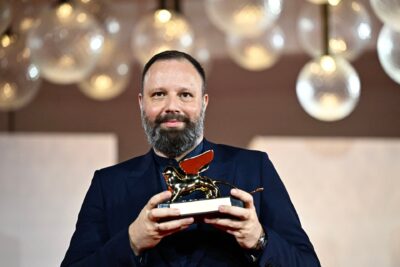
Yorgos Lanthimos’ Greek New Wave films take an uncompromising ethical and formal stance. Kynodontas (Dogtooth, 2009) and Alpeis (Alps, 2011) treat family and language as closed power regimes, consciously refusing to leave the audience in a comfortable moral position. Violence is neither dramatized nor cathartic; instead, it is embedded in the everyday, mundane, and thus more disturbing. Lanthimos’ originality lies in presenting grotesque elements not as aesthetic choice but as the functioning of social order. The audience is not invited to understand or empathize but to witness the system’s operation. With his Hollywood transition (The Lobster, 2015), this estranging language is preserved formally; however, the content becomes increasingly readable, theatrical, and aesthetically pleasurable. The Favourite (2018) and Poor Things (2023) shift Lanthimos’ cinema from radical ethical discomfort to a stylized spectacle. Sexuality, the body, and power continue to generate provocative images, but they now immerse the audience in aesthetic pleasure rather than exclusion. Absurdity transforms from an epistemological void into a recognizable and rewardable auteur signature. The Faustian bargain becomes evident here: Lanthimos withdraws narrative radicalism while converting aesthetic distinctiveness into a global brand. Bugonia (2025) marks a clear threshold of this transformation. Though thematically exploring alienation, paranoia, and broken perception, these elements are no longer an extra-systemic threat but a high-production “Lanthimos experience.” The audience does not get lost—they know what to expect. Lanthimos remains creative and witty, yet no longer a foreign risk-generator for Hollywood; he is a controlled deviation. As budgets rise—from $275,000 for Dogtooth (2009) to $97,000 for Alps (2011), $2 million for The Killing of a Sacred Deer (2017), $15 million for The Favourite (2018), $35 million for Poor Things (2023), and $70 million for Bugonia (2025)—the correlation between budget scale and aesthetic originality becomes increasingly visible. Rising expectations tie the director to larger, complex productions, replacing sharp minimalism with controlled but safer formality. Lanthimos may consciously pause or downscale future productions, not as a personal choice alone, but as a natural outcome of redefining his auteur identity.
Ari Aster’s cinema similarly illustrates the evolution of trauma from metaphysical to spectacle. His early films transform horror from a genre mechanism into a psychological and existential burden. Hereditary (2018) positions the family as the carrier of trauma, centralizing guilt and grief; Midsommar (2019) treats community, ritual, and belonging not as therapeutic but as threatening structures. Here, fear is not an experience to be “overcome” but a persistent psychological state; originality lies in offering the audience no safe exit. As his Hollywood position strengthens, the traumatic intensity broadens formally but begins to lose direction. Beau Is Afraid (2023) exemplifies the paradox of large budgets and unlimited creative freedom: while visually daring, it narrows narratively, transforming trauma from collective experience into personal neurosis. Trauma becomes an aestheticized psychological labyrinth, not an unsettling ethical question. Eddington (2025) marks a critical threshold in Aster’s Faustian arc: societal paranoia and contemporary American neuroses are central, yet the extension does not evolve into radical political cinema. Instead, Aster’s anxiety aesthetic becomes a “tolerable discomfort simulation” within the system. The audience is unsettled but not threatened; the film is discussed, but not destabilizing. Aster’s originality remains, yet its guiding factor is no longer intrinsic necessity but the maximum disturbance Hollywood can tolerate.
Throughout this essay, what we have traced is less a narrative of singular “transition to Hollywood” than the increasingly subtle and invisible bargaining modern auteur cinema engages with the system. The Faustian pact no longer manifests as overt betrayal or sudden downfall; instead, it points to a space where creativity appears preserved, yet its radical impact is aestheticized and neutralized. From Hitchcock forcing Hollywood into a dance to Lanthimos and Aster in their golden cages, this trajectory reveals one of the most critical transformations in cinema history: originality is not banned; rather, it is polished, while its capacity to generate political, ethical, and existential threat is curtailed. Today’s auteur is not silenced—they are listened to, rewarded, and circulated. The problem lies precisely here. Moments when cinema is truly dangerous are now rarer, shorter, and more controlled; perhaps for this reason, it has never been more “acceptable.”
Author: Nil Birinci
Part 1: First Wave: From Weimar to Hollywood (1920s–1940s)
Part 2: Second Wave: Postwar Era & Toward New Hollywood (1950s–1970s)
Part 3: Third Wave: The 1980s–1990s & Industrial Wings