
Mad Men (2007–2015) – Part 2
Matthew Weiner
TV Series | Drama | 45′ x 92
America
Jon Hamm | Elisabeth Moss | Vincent Kartheiser

Awards and Festivals
167 Wins, 450 Nominations

Mad Men (2007–2015) Part 2:
Gender Relations
In the series, most of the men are portrayed as womanizers who drink heavily and smoke constantly. Marriage holds almost no meaning for them. They can sleep with any woman they want on any night—even if those women are their secretaries, a family friend’s wife, or a colleague’s spouse. While they are extremely jealous when it comes to their own wives, making advances toward a friend’s wife is treated as something completely normal. Their wives are seen merely as a type of servant who takes care of the house and children, prepares their meals, and keeps their clothes in order. Sleeping with this “servant” occasionally to keep her satisfied is, in their minds, more than enough.
Most of the women (especially the secretaries) are depicted as gold diggers—cunning characters who will do anything to get money from the handsome, wealthy men they target.
Still, there are exceptional characters among both the men and the women who fall outside these stereotypes.
They hire secretaries almost as if choosing a mistress; and most secretaries, aware of this dynamic, take those positions with plans to benefit from it. However, after Roger has a heart attack and clings to his wife and daughter, remembering the existence of his own family, he becomes one of the most interesting and perhaps most sincere characters amid all the moral decay.
The portrayal of working women as people who will do anything men ask of them for the sake of career, status, or position is a highly controversial topic.
Although some behaviors in the series are attributed to drunkenness, one must remember this: People don’t do things drunk that they would never consider sober; they simply act with fewer inhibitions. What they do are things they already want to do deep down. An adult knows what they become when they drink. Except for extremely rare cases, someone who frequently drinks to the point of losing control is fully aware of what they are doing.
When Betty tells Don that he never spends time with the children and takes no responsibility at home, Don gets angry and replies, “I pay for everything—the bills, the clothes on your back, and much more.” This reflects the typical worldview of an upper-class married man in 1960s America. Don believes this is enough; that all responsibilities involving the home and children belong to the woman. He himself has the right to continue living almost as if he were a single man. And yet Don is presented as one of the “better” men in the series.
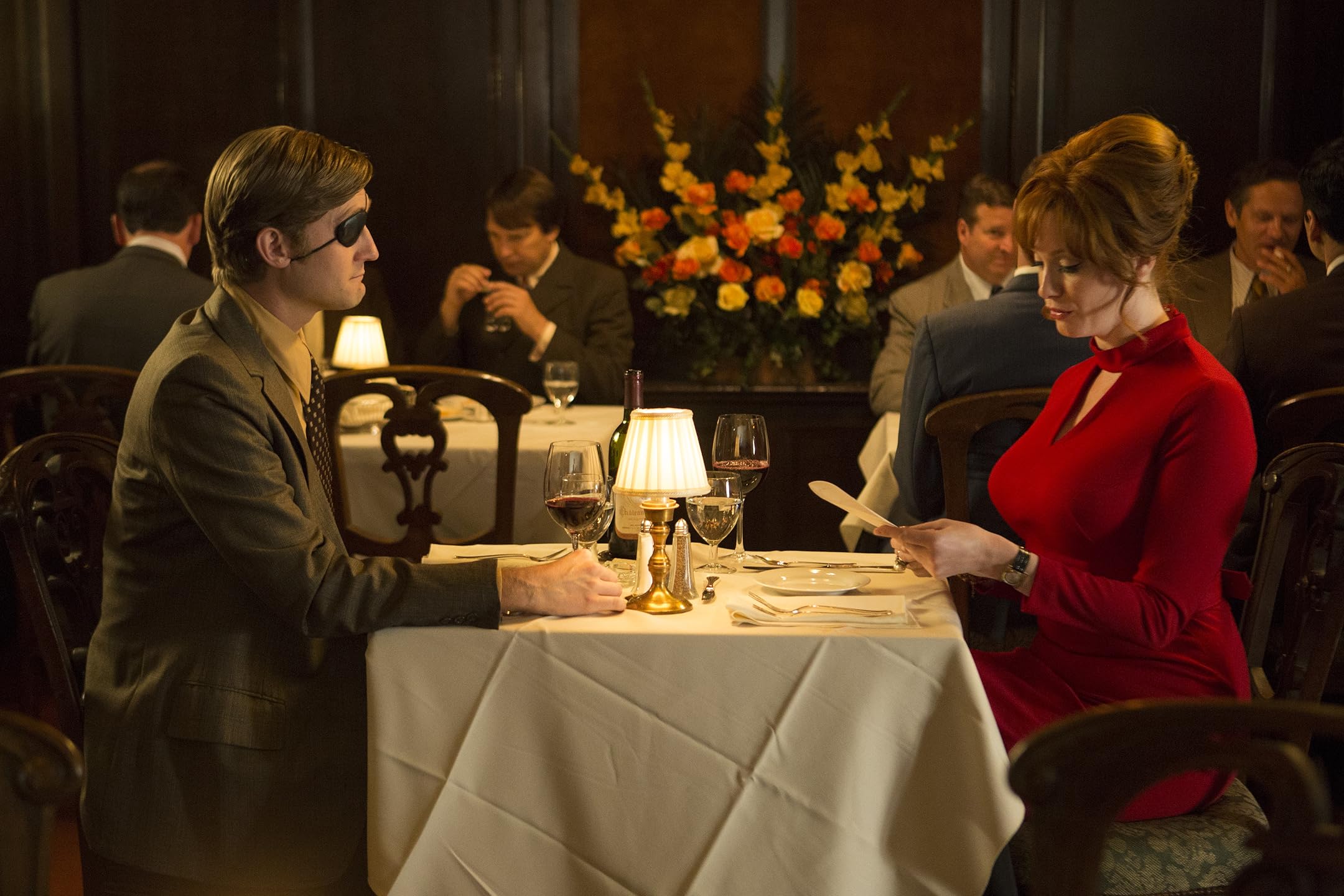
When Joan’s husband, a doctor, returns from Vietnam, he tells her—contrary to what he had previously promised—that he must go back. This leads to an argument because he had said something completely different before enlisting. Moreover, Joan had carried the entire burden of his early medical career, compensating for his financial and professional failures. Joan is furious. She tells him to go and never return. When her husband says, “The Army needs me and my leadership,” Joan replies, “I’m glad the Army makes you feel like a man, because I’m tired of trying to do that.” When he says, “The Army makes me feel like a good person,” she fires back: “You were never a good person—not even before we got married.” In the end, like many male characters, he escapes to the Army instead of taking responsibility for loving and supporting his family.
During Don’s second marriage to Megan, he has an affair with the wife of a famous heart surgeon living in their apartment building. When the woman ends the affair, Don can’t accept it and becomes obsessed—calling her, going to her door, trying to figure out whether she’s home—behaving almost like a teenager. In their final phone conversation, the woman tells him to stop calling and reminds him that he once claimed to love Megan too, bluntly telling him he is not a trustworthy man.
The men depicted in the show want light-hearted, fun women to sleep with. Yet they cannot tolerate their own wives or girlfriends behaving even remotely similarly. What’s most disturbing is their lack of empathy toward their spouses and the fact that they act more freely in matters of sexuality than even single people do.
Workplace Relations
The series reveals the typical American corporate culture and work style. Many behaviors portrayed are the kind that anyone who has worked in a European company would find shocking and detestable. Regardless of age or position, people with adolescent personalities hold serious responsibilities, and internal discipline is almost nonexistent. This work culture also explains why many major American companies—especially in the financial sector—went bankrupt in later decades. Nowhere else in the world would individuals with such character traits be placed in top management positions, yet the series shows clearly how they became star executives in major corporations.
Advertising agencies are depicted as playgrounds where wealthy men create spaces to conceal their need for alcohol and women—almost like “love nests” designed for mistresses.
Women remain second-class employees; the idea that they must work under men and that hierarchy can only be established that way permeates every scene. The hierarchy is so rigid that it resembles a military chain of command.
When Peggy is promoted from secretary to copywriter, she speaks harshly and condescendingly to a young woman who comes in for a radio ad—mirroring the behavior she has learned from the men. It’s like a private who becomes a sergeant and begins mistreating the other soldiers.
Promotions and positions within the company are so important that when Pete Campbell’s father dies, his first thought is, “What should I do now? How will people see me?” His career and image matter more than his grief. Meanwhile, his mother is upset about having to cancel her trip, and Pete and his brother are fighting over their inheritance.
One example that perfectly illustrates American corporate practice is when Sterling Cooper drops its mid-sized client, Mohawk Airlines. To land a much larger client—American Airlines—they must not work with any competing airlines. Loyalty and professional ethics are completely abandoned for greater profit. This happens while American Airlines is experiencing a major crisis after one of its planes crashes.
Don gathers his team and asks them to “forget the past entirely” and to sell future-oriented dreams in their new campaign. Kennedy is president at the time, and the U.S. is said to be lagging behind the Soviets in the space race. The dream of going to the moon becomes the new showcase of the American Dream. This scene perfectly summarizes advertising’s essence: selling dreams to the client.
Homosexuality is still taboo and considered a disease. When someone’s sexuality is discovered within the company, people react as if they have seen an alien—showing disgust, mocking expressions, and ridicule—which reflects how conservative and macho American society was regarding race, gender, and sexual orientation.
Senior male executives spend nights out with women and come to the office the next morning without even showering—shaving at work and wearing the spare shirts they keep in drawers. Everyone knows about this lifestyle; sometimes even their secretaries fetch their spare shirts. All of this makes the supposedly polished American executives feel, in reality, like a sweaty, cigarette-soaked mess.
On New Year’s Eve, only Don Draper and the British-born executive Lane Pryce remain at the office; neither has family to spend the night with. After Don’s invitation, they go to the movies and then to dinner. Don offers to call a girlfriend and even “arrange” a woman for Lane if he wants. When Lane refuses, Don is surprised and asks, “Then what are you going to do?” To an American advertising executive, free time is something to be spent with a woman—nothing else.
In the theme of family and loneliness, when Joan returns from maternity leave, she goes to Lane Pryce’s office and says that even though she has her mother and baby at home, she feels incredibly lonely. She feels forgotten, unmissed. This moment shows that loneliness cannot always be resolved even within a family. Similarly, Betty experiences profound loneliness in her marriage to Don, despite having children.
Don’s marriage to Megan—who continues working at the company for some time after their wedding—reveals through multiple ugly interactions why such situations are entirely forbidden in many major international companies today.
One of the harshest examples of women being viewed both as inferior to men and as corporate commodities occurs when they try to land Jaguar as a client. The Jaguar executive wants to sleep with Joan, whom he saw and liked at the agency. Instead of being insulted and leaving the table, the team treats the request as normal and is willing to “offer” a colleague to secure more profit. In doing so, they place themselves in the morally corrupt role of pimps in the client’s eyes, without showing any discomfort.
Click here to read the first part of the article. To be continued…
Yazar: Ruşen Ertan


