
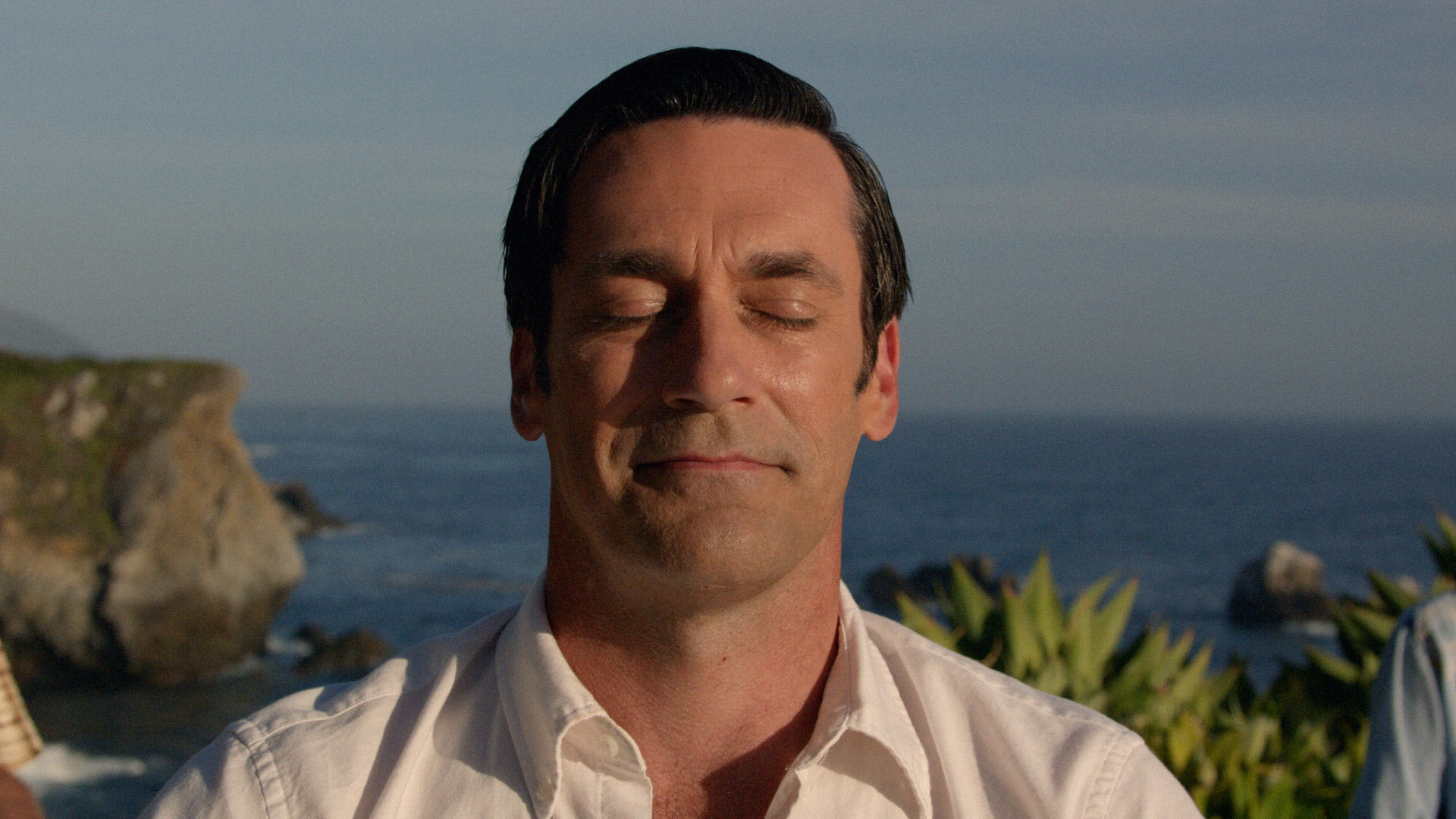
Mad Men (2007–2015)
Matthew Weiner
Tv Series | 45′ x 92
America | Jon Hamm | Elisabeth Moss | Vincent Kartheiser

Awards and Festivals
167 Wins, 450 Nominations

Mad Men (2007–2015) Part 1: America in the 1960s–1970s
Mad Men is a series that follows a New York–based advertising agency operating from the early 1960s to the early 1970s. Through the firm and its employees, it explores both intra-company and inter-company dynamics, as well as gender relations, all set against major social and political developments of the era. The show spans seven seasons and a total of 92 episodes, offering a remarkably expansive narrative. As the episodes progress, viewers gradually become more immersed in the characters and the world they inhabit. Still, it is fair to say that Season 7 gives the impression of being somewhat forced. Compared to the earlier seasons, it presents noticeable inconsistencies and logical gaps, at times feeling as though it was added on later without prior planning—and even written by a team detached from the spirit of the initial seasons.
One of the most striking lines in the series comes from Don Draper, the creative director and central character. At one point, while attempting to put his feelings into writing at home, he reflects: “People tell you who they are, but we don’t believe them—because we want them to be who we want them to be.” It reads almost as a direct message to the audience.
This text aims to expand on the series through the issues and characters it portrays.
The story unfolds in a period often idealized through Hollywood’s imagery—postwar America and, more specifically, New York City, the country’s most modern and cosmopolitan center. Yet the question arises: was it truly as glamorous as portrayed?
The 1960s mark roughly fifteen years after the end of World War II. With the war having devastated much of the world—but leaving American soil untouched—global markets effectively opened to the United States, rapidly generating immense wealth. This paved the way for capitalism’s evolution into a full-fledged consumer society. The prerequisite of such a society is, of course, persuading people to purchase products they do not actually need—and the mechanism for this is advertising.
Throughout the series, several significant historical events are referenced, albeit briefly and often in a simplified way: John F. Kennedy’s election and subsequent assassination, and its public impact; the lingering effects of McCarthy-era anti-communist persecution; the influence of Martin Luther King Jr. and the aftermath of his assassination; and the social repercussions of the Vietnam War. The show also touches on the early stages of African Americans entering corporate workplaces.
Although the period depicted is not particularly distant—indeed, within living memory—the series reveals that even in New York, considered the most progressive city in the United States, racism and racial segregation were deeply entrenched. Contrary to the popular myth that only the Southern states were racist, the series suggests that Northern states merely practiced a more “polished” form of discrimination. Similarly, it portrays the intense sexism and gender-based discrimination prevalent even in the most modern, wealthy, and educated corporate environments.
Bertram Cooper, the founding partner of the agency, frequently recommends Ayn Rand—an emblematic representation of mid-century American corporate ideology. Her ideas, and the broader ethos they symbolized, helped shape a business culture that prized efficiency over humanity. Ironically, this same America would later position itself as a global authority on freedom, democracy, and human rights.
The series also includes small yet telling scenes that convey cultural differences. After a family picnic, for example, an upper-class family casually leaves all their trash scattered across the grass before driving away in their luxury car—a striking reflection of a different understanding of public responsibility, especially when compared to European norms.
Another detail is the presence of vending machines in the office, from which employees must buy their own sandwiches and snacks—something that highlights contrasting approaches to workplace culture in American versus European firms.
Through the character of Lane’s wife, viewers get a sense of how New York might have appeared to Europeans at the time. She sees the city as a kind of exile from “civilization” and longs to return to London.
Similarly, Roger Sterling’s inability to name a bottle of wine at an upscale restaurant reveals another aspect of American elite culture: material wealth without necessarily the cultural sophistication associated with it in Europe.
The series also includes moments that underscore the racism entrenched in everyday life. In one scene, while the male employees discuss attending Muhammad Ali’s (then Cassius Clay’s) championship boxing match, Don’s secretary remarks dismissively that one could simply throw a dollar out the window to watch “two Black men fight”—a stark reminder of the prejudices of the era.
Leftist politics, rising in the 1960s both in the U.S. and globally, are portrayed in a somewhat caricatured manner: characters such as Megan’s father, a Canadian professor, or Peggy’s activist boyfriend, are depicted as idealistic yet unrealistic.
Another meaningful moment arises when anti-Vietnam War protests erupt in the 1970s. Don remarks to Megan that they will never be shown on prime-time television—an observation that suggests the longstanding entanglement of government and media.
For contemporary viewers, one of the most striking aspects of the series is the near-universal, almost compulsive use of cigarettes and alcohol. Everyone smokes everywhere, constantly. Despite their elegance, the characters appear perpetually surrounded by the smell of smoke. Alcohol consumption is equally pervasive, to the point of impairing work performance. Notably, even pregnant women smoke and drink, underscoring how limited public health knowledge was in the 1960s.
In one scene, Roger and Don are on a flight to Los Angeles. When their glasses empty, Roger asks the stewardess for “two more whiskies—and one for the pilot,” capturing a time when even pilots were not expected to abstain from alcohol while working.
Later, as the agency merges with the industry giant McCann Erickson, Sterling Cooper’s female employees face blatant sexism and objectification from McCann’s senior male executives—an uncomfortable but historically resonant portrayal. How such a major firm never pursued legal action against this depiction remains a separate question.
To Be Continued…
Rusen Ertan


