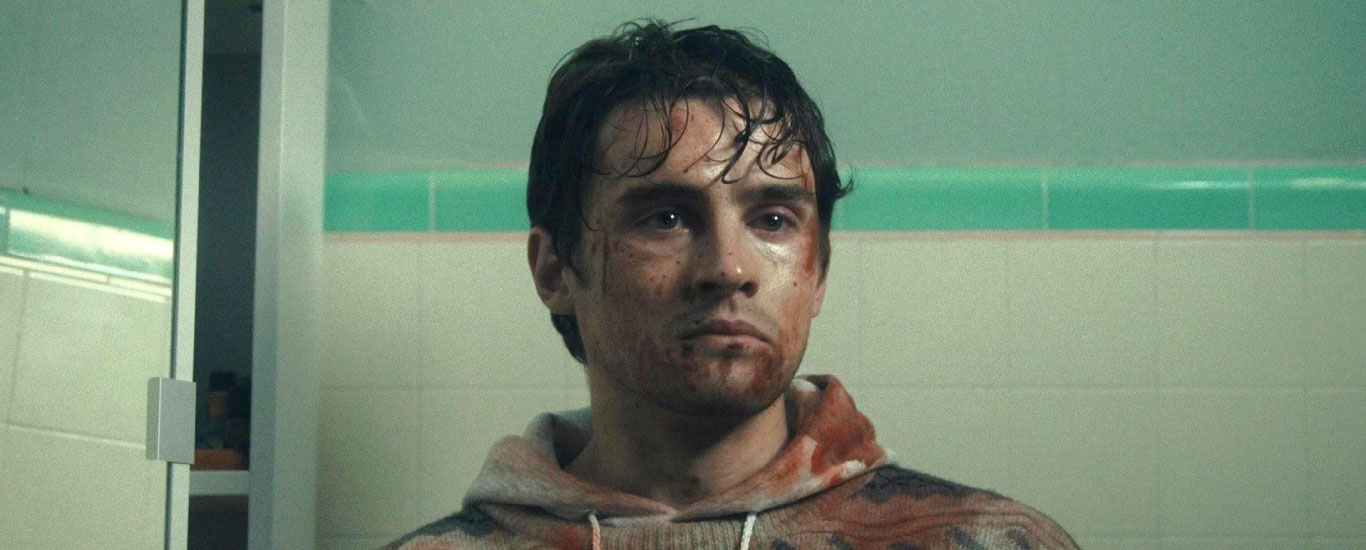
Obsession
Recent horror cinema has been an exciting space for genre enthusiasts. In particular, the work of younger filmmakers has demonstrated just how vibrant and versatile horror can be, constantly expanding the genre’s narrative possibilities. Zach Cregger’s Weapons, which premiered last year, was one of the standout examples of this ongoing creative resurgence.
The director of Obsession, known in Turkey as Saplantı, is American filmmaker Curry Barker. Before moving into feature filmmaking, Barker built a substantial online following through his YouTube channel That’s A Bad Idea, where he gained popularity with short comedy sketches. The channel currently boasts over a million subscribers. Barker also casts his longtime creative collaborator Cooper Tomlinson as Ian. The two first met while studying at the New York Film Academy and have continued producing content together ever since, making Tomlinson’s presence in Barker’s feature debut a natural extension of their creative partnership.
In August 2024, Barker released Milk & Serial, a found footage horror film on YouTube. Although the project is feature-length, it is generally not regarded as his official debut due to its unconventional distribution and lack of a traditional theatrical release. As a result, Obsession is widely considered Barker’s first official feature film.
The film premiered at the Toronto International Film Festival in September 2025, technically making it a 2025 release. However, because its wide theatrical rollout began on May 13, 2026, many publications and film platforms have classified it as a 2026 film.
Obsession‘s greatest strength lies in its screenplay. Barker constructs his characters not only through plot developments but also through carefully crafted dialogue. The tension between what the characters say and what they truly feel adds a compelling psychological dimension to the narrative. As a result, the film evolves beyond the framework of a supernatural horror story and becomes a character study centered on obsession, desire, and possession.
Screenplay and Subtext Analysis
At the heart of Obsession lies a wish-granting mechanism that evokes the concept of a “binding spell” found in many cultures. The desire to bind another person to oneself through love may initially appear romantic, but at its core lies an attempt to override that person’s autonomy and free will. The film builds its entire narrative around this idea. What begins as an innocent wish gradually transforms into a curse that affects not only the person who makes it but everyone around them.
For this reason, Bear’s story can be read not as the story of a villain, but as the story of a seemingly innocent desire. Barker successfully draws the audience into the character’s emotional perspective. Bear’s feelings for Nikki are genuine, and his wish initially resembles a romantic gesture. Yet as the narrative unfolds, the film demonstrates how easily good intentions can evolve into control and domination.
We first meet Bear while he rehearses a confession to Nikki. His feelings emerge from a sincere and protective place. The problem, however, is that his actions ultimately seek to eliminate Nikki’s agency regardless of whether his feelings are reciprocated. In this sense, the film recalls the old saying that “the road to hell is paved with good intentions.” Once free will disappears, neither a genuine relationship nor authentic love can truly exist.
The characters’ names also invite symbolic interpretations. In English, the word “bear” refers not only to the animal but also to the act of enduring or carrying a burden. As a result, the character can be read both as a representation of uncontrolled masculinity and as someone destined to bear the consequences of his own actions. Throughout the film, this second meaning becomes increasingly prominent.
The symbolism surrounding Nikki’s name is equally intriguing. Some interpretations of the name connect it to the idea of “two trees.” Considering the two willow branches that are broken later in the story as part of the wish ritual, the association feels relevant to the film’s symbolic framework. Whether Barker intentionally intended this connection is impossible to know, but within the film’s metaphorical world, the reading remains compelling.
After Nikki loses her necklace, Bear enters a souvenir shop hoping to find a meaningful replacement. Dissatisfied with the available options, he instead purchases a small seven-dollar wooden charm contained inside a box called “One Wish Willow.” His intention is to encourage Nikki to make a heartfelt wish. Beneath this seemingly innocent gesture, however, lies a deeper desire: winning Nikki’s affection and attention.
In this respect, Obsession shares common ground with many stories built around wish fulfillment. Unlike fantasy or comedy narratives that explore similar premises, however, Barker approaches the concept through the language of horror. The central tension of the film emerges from this choice: the fulfillment of a desire becomes the catalyst for disaster rather than happiness.
The first scene in which the film’s principal characters appear together takes place at Barker’s Pub. The venue’s name, which mirrors the director’s surname, can be interpreted as a playful self-reference embedded within the film’s world. While it has no direct narrative significance, it stands out as an amusing personal touch from the filmmaker.
The film’s first major turning point occurs on the night Bear drives Nikki home. Despite all his preparation, he fails to express his feelings openly, and the conversation unintentionally slips into the familiar territory of “just friends.” It is immediately afterward, when Bear breaks the branch of the wish tree, that the story’s supernatural dimension fully emerges. The wish takes effect almost instantly, and Nikki begins to undergo a transformation that defies easy explanation.
From this point onward, the film establishes a dynamic built around two distinct versions of Nikki. On one side is her original self; on the other is the new persona that emerges after the wish is granted, a figure the audience comes to know as “Freaky Nikki.” Much of the film’s tension is generated through the conflict between these two identities.
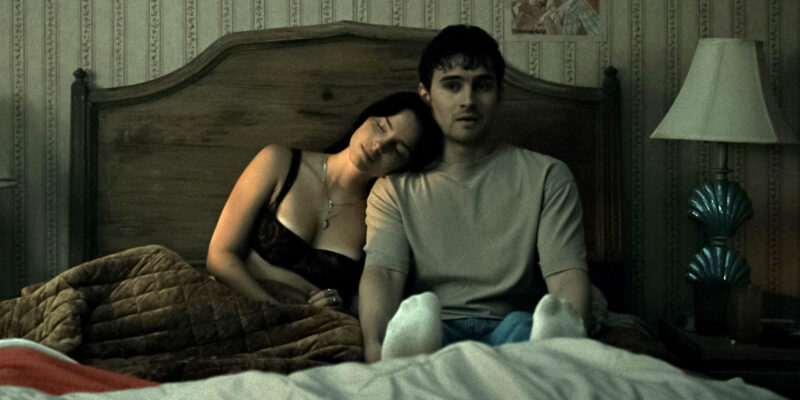
Considering the connotations of the word “freaky” in English, the character’s name feels particularly appropriate. The term suggests both strangeness and sexual deviance, making Freaky Nikki more than simply a possessed body. She can also be interpreted as a manifestation of desire in its most uncontrolled and destructive form. Her obsessive attachment to Bear erases any distinction between affection and fixation, turning love into something invasive and overwhelming.
It is also at this stage that Inde Navarrette’s performance begins to stand out. The actress communicates the transition between Nikki and Freaky Nikki not only through dialogue but through subtle shifts in facial expressions, body language, and eye contact. Particularly in the film’s most unsettling sequences, her performance becomes one of the key elements that reinforces the character’s uncanny presence. It is the kind of work that deserves recognition among the more memorable performances in contemporary horror cinema.
Freaky Nikki functions as an extreme embodiment of obsessive love. Resembling the behavioral patterns of a stalker, she transforms affection from a protective emotion into a suffocating and destructive force. What makes the character so disturbing is not merely what she does, but the enthusiasm and apparent innocence with which she does it. As a result, Freaky Nikki emerges as one of the film’s most memorable creations.
Yet the film is not merely telling the story of a supernatural curse. As the consequences of Bear’s wish become increasingly apparent, its central thematic concern comes into focus. The brief sexual encounter between Nikki and Bear carries implications far darker than those of a conventional romantic relationship. Nikki’s free will has effectively been stripped away, making the scene impossible to read as a straightforward expression of mutual desire. Rather than presenting the relationship as a love story, the film explores the disturbing consequences of desire turning into possession and exploitation. In particular, Freaky Nikki’s direct gaze into the camera prevents the scene from being romanticized, instead placing the audience in a position of ethical discomfort.
This is where the film’s central concern fully emerges. Obsession is not merely a story about a supernatural curse; it is also an examination of the darker consequences of unrequited desire, possessiveness, and the resentment that can grow from rejection. Rather than attempting to win Nikki over through honest communication, Bear seeks to obtain her through a wish, a choice that can be read as a reflection of both his emotional inadequacy and his desperation.
In this respect, the film can be interpreted as a critique of incel culture, a phenomenon that has become increasingly discussed in recent years. Derived from the term “involuntary celibate,” the concept has come to be associated with online communities shaped by misogyny, resentment, and the radicalization of rejection. Bear’s decision to deprive Nikki of her free will in order to obtain her places this critique at the center of the film’s narrative.
As a result, the film’s sexual encounter gains significance not as a romantic moment, but through the ethical implications of a relationship in which one party’s agency has been stripped away. This is where Barker’s greatest strength becomes apparent. While the film places a troubling desire at its center, it neither glorifies nor romanticizes it. Instead, it exposes the destruction such a desire leaves behind. In doing so, the film avoids reproducing the very ideology it critiques and instead interrogates its consequences.
Nikki’s increasingly disturbing transformation further reinforces this idea. Whether she is dismembering Sandy’s body and serving it to Bear as a sandwich, sealing the exits of the house to prevent him from leaving, eating insects, or engaging in various acts of childish yet unsettling mischief, the character demonstrates how completely the line between love and obsession has disappeared. At this point, Barker’s debt to the tradition of demonic possession narratives, particularly The Exorcist, becomes increasingly evident. Moments such as Nikki vomiting onto Bear’s face near the film’s conclusion further highlight this connection.
Some of the film’s strongest writing emerges through Bear’s conversations with their mutual friends, Sarah and Ian. Ian believes that Bear is exploiting Nikki’s fragile emotional state, while Sarah argues the opposite—that Nikki is the one taking advantage of Bear. What makes these scenes particularly compelling is that the film refuses to present either perspective as definitively correct. Barker allows the same situation to be viewed through two different lenses, revealing the moral complexity of the relationship at the story’s center. As a result, these scenes do more than provide exposition; they invite the audience to engage in their own ethical evaluation.
As mentioned earlier, the narrative revolves around two central characters and two key supporting characters. Consequently, as the story approaches its conclusion, the way Barker chooses to resolve their arcs becomes an important question. After all, Obsession is a horror film, and given the tension that has been steadily escalating throughout the narrative, the possibility of every character emerging unscathed never seems particularly likely.
The film enters its final act with the deaths of Sarah and Ian. These deaths serve a purpose beyond simply escalating tension; they can also be read as tragic consequences of the desires, flaws, and emotional conflicts that the characters embody throughout the story. Rather than reducing the supporting characters to mere victims, Barker succeeds in preserving their thematic significance within the narrative.
The more pressing question, however, concerns the fate of Nikki and Bear. After witnessing the deaths of his two closest friends, Bear becomes convinced that nothing can ever return to normal. Unable to bring himself to pull the trigger, he decides to end his life in the same manner as his beloved cat Sandy—by overdosing on medication. Although he soon regrets the decision and attempts to save himself, the event that ultimately determines the story’s outcome occurs at that very moment. Freaky Nikki breaks the wish tree Bear originally purchased, reactivating the curse once again.
What makes this scene particularly effective is the fact that the transformation is never shown directly. Instead, the audience understands what has happened through the sound of a box opening and the crack of breaking wood coming from another room. Moments later, “Freaky Bear” appears, having forgotten everything that previously occurred. At this point, the film transforms into a dark romance in which obsession has consumed both sides equally.
The film’s closing exchange, punctuated by Nikki’s repeated phrase, “Forever and ever and ever and ever,” is especially striking. The repetition feels reminiscent of similar motifs found in Stanley Kubrick’s The Shining, suggesting yet another deliberate nod to horror cinema history. Barker’s affection for the genre’s classics becomes increasingly visible throughout the film’s final stretch.
The film’s final twist deepens the tragedy even further. As Freaky Bear succumbs to the effects of the overdose, Freaky Nikki prepares to die alongside him. At the very last moment, however, the curse finally breaks, allowing the real Nikki to regain control of her body. She awakens to find herself surrounded by the bodies of her closest friends. This moment provides the emotional core of the ending. Nikki emerges not only as a victim of the curse, but also as one of its unwilling instruments, forced to live with the consequences of everything that has happened.
The ending also invites comparisons to The Exorcist. Much like Regan in William Friedkin’s classic, the survivor of a supernatural catastrophe is left carrying the burden of events they can barely comprehend. As a result, the conclusion functions not only as a horror ending but also as a story about trauma and survival.
For Curry Barker, who is only twenty-six years old, Obsession represents an extraordinarily impressive feature debut. Despite its modest budget of approximately $750,000, the film’s commercial success demonstrates that Barker has managed to attract attention far beyond the independent horror scene.
More importantly, Barker achieves more than financial success. Through his emphasis on character writing, thematic depth, and subtext, he establishes himself as one of the most promising young voices in contemporary horror cinema. The announcement that he will direct the upcoming The Texas Chainsaw Massacre reboot suggests that the industry has recognized that potential as well.
Obsession is an impressive debut that refuses to rely solely on jump scares or shock value. Instead, it places themes such as obsession, desire, possession, and free will at the center of its horror. For audiences interested in the recent rise of independent horror cinema, it stands out as one of the more noteworthy films of the past few years.
Author: Volkan Çağlayan
Editor: Zehra Eda Sert