The Christophers (2025)
Steven Soderbergh
Comdey | Drama
United States | United Kingdom
Michaela Coel | Ian McKellen | Jessica Gunning

Awards and Festivals
1 Nomination
Love-Hate Relationship With Art
The Christophers (2025) reflects Soderbergh’s love-hate relationship with cinema : a filmmaker who stands both within and outside the mainstream, belonging neither fully to arthouse nor entirely to Hollywood, resisting any fixed categorization.
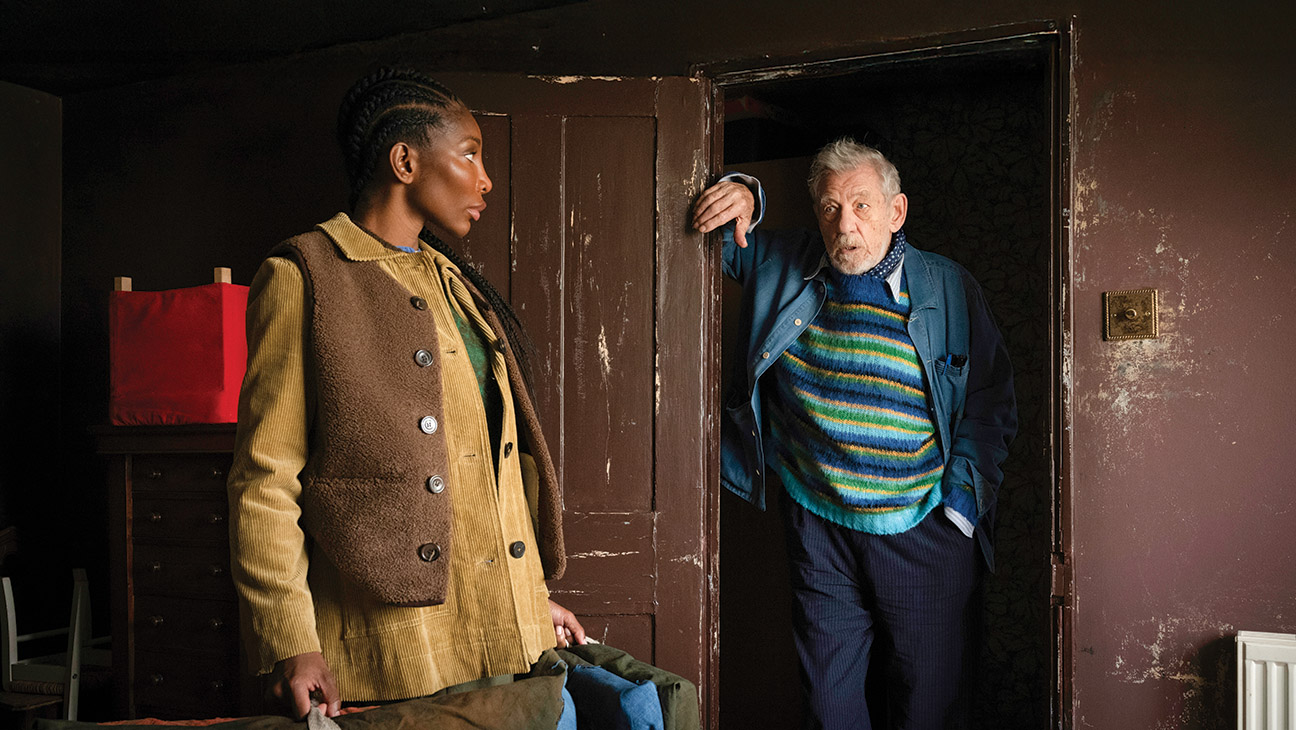
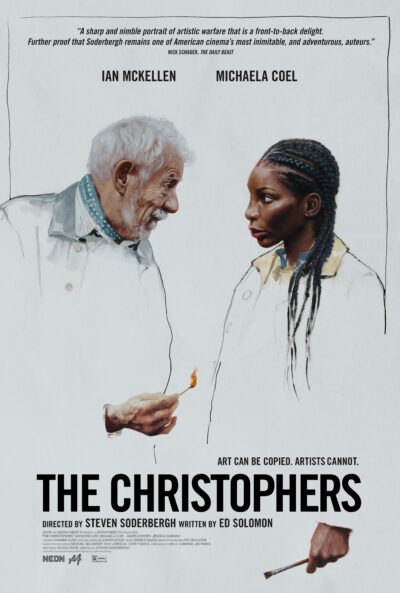
The film takes its title from the mysterious – even cursed – portrait series of Julian Sklar (Ian McKellen), a once-renowned and gifted artist now in the final stage of his life. Reminiscent of Ebenezer Scrooge, this irritable figure is forced into self-confrontation by a kind of “ghost of the past”: Lori Butler (Michaela Coel), a young artist hired by his estranged children. What begins as a scheme to profit from the sale of The Christophers paintings gradually evolves into an unexpectedly intimate relationship between Sklar and Butler. As Butler compels him to face both his past and present, she also shows him a glimpse of the future, one in which a tech investor plans to exhibit his works in a tax-deductible desert gallery outside Las Vegas, reducing them to mere commodities, pushing him toward a Dickensian transformation.
The dialogue, marked by sharp wit, makes effective use of humor as both a lightening and revealing force:
“Art is supposed to be made for immortality. In fact my art died somewhere along the way before I even realized what it was, and I’m still here. I guess I became immortal instead.”
“Don’t tell me you became an artist because you admired me. You became one because you were trying to fill a void from your childhood. I was just a stone you tripped over while running toward your freedom through art.”
Questions about the place of art in the modern world and its commodification within economic systems have been asked throughout the history of art, and remain relevant precisely because they remain unanswered. The film engages with these questions while also attempting to capture the spirit of the times through Sklar, a character with radical ideas; such as “OnlyFans for Artists” model online. Still, in its deliberate distance from fields like AI and digital art, the film’s grasp of the contemporary art world feels at least a decade behind. Even its Banksy reference now feels somewhat outdated following the exposure of his identity.
Cinematically, the film opens with a compelling visual language. The tracking shot and Dutch angle in the scene where Butler enters Sklar’s house successfully draw the viewer into his world. The strangely angled, cluttered, and unkempt space she enters – clad in a bright yellow raincoat and a sharp-edged boxy backpack, almost like an idealized young artist figure – visually echoes the chaos of Sklar’s past. However, the film fails to sustain this visual coherence. As it progresses, the increasing confinement to interior spaces gives it, at times, the feel of a stage drama. In this sense, the film’s visual style mirrors the art it critiques: initially distinctive, it gradually settles into something more familiar and safer. Combined with its overly pronounced musical cues reminiscent of British crime television along with typical London houses and McKellen’s Shakespearean delivery, the film begins to resemble a domesticated British black-comedy version of a Wes Anderson fantasy.
In the end, while The Christophers does not quite amount to a fully convincing achievement, it remains a worthwhile watch thanks to its intelligent and often entertaining dialogue on art, McKellen’s strong performance, and the material it offers particularly for viewers interested in the visual arts. Drawing a parallel between Sklar’s once-bright, now-fading artistic legacy and Soderbergh himself who, since his breakthrough at Cannes in 1989, has repeatedly questioned his place in cinema, stepping away and returning in cycles does not feel like an overstatement. After all every artist eventually reaches a point where they must weigh their own value and legacy. Perhaps this is precisely what defines art: its intangibility, and its relentless tendency to make one doubt oneself.
Author: Zeynep Bakanoğlu