Lois Weber
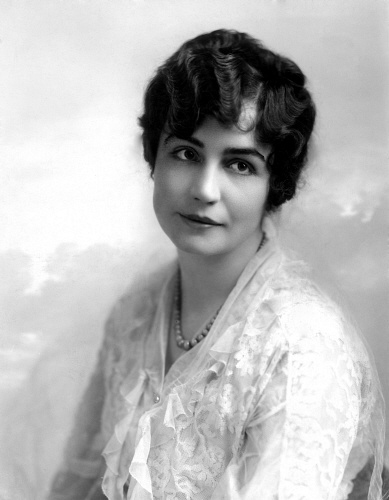
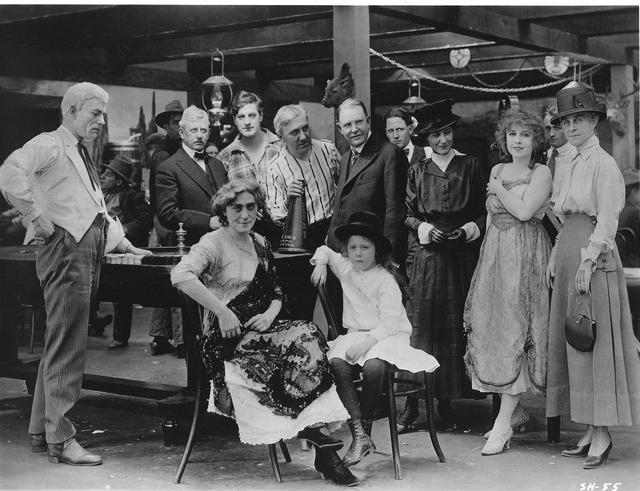
Lois Weber is generally regarded by film historians as the most important female director of the silent era. She had a long career, working in film from 1910 until her retirement in 1934. She is also said to have claimed that, in 1896, she was already directing films—and that Alice Guy-Blaché was not the first woman to do so, but had actually watched her while she was making a film.
Like many filmmakers before 1920, Weber worked across multiple roles as an actress, director, producer, and screenwriter. As was the case with many women filmmakers of the period, she was highly versatile and involved in virtually every aspect of production. What distinguished Weber, however, was that she also directed films within the mainstream studio system.
She began her career in 1908 at the newly established Gaumont studio in New Jersey, working alongside Herbert Blaché, the husband of Alice Guy-Blaché. She later moved to Universal Studios. Early in her career, she directed socially challenging dramas dealing with issues such as abortion and racism, but she eventually found herself increasingly drawn to suspense and thriller filmmaking.
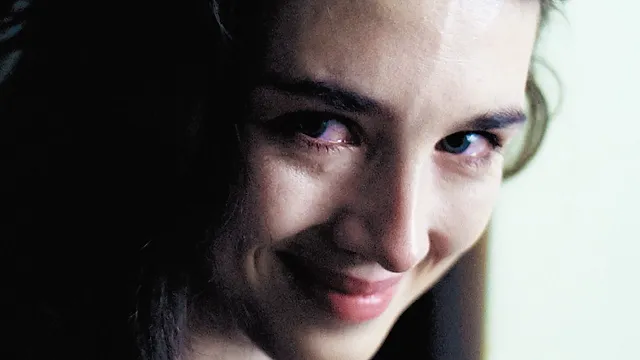
Although most of Weber’s films have been lost, her 1913 short film Suspense survives and has been preserved. Inspired by André de Lorde’s 1901 French Grand Guignol play Au Téléphone (On the Telephone), Suspense is considered one of the finest examples of early thriller cinema.
The roughly ten-minute film, co-directed by Weber and her husband, Phillips Smalley, follows a woman and her child being terrorized by a disheveled-looking intruder at an isolated farmhouse in Los Angeles. Weber also plays the woman herself.
The film is particularly celebrated for its cinematography. Weber and Smalley employ a three-way split-screen technique to show three events unfolding simultaneously within a single frame: the frantic wife calling her husband, the husband’s horrified and anxious reaction, and the intruder breaking into the house and cutting the telephone wires.
One of the most chilling images in Suspense is the shot of the intruder slowly ascending the staircase, a long knife poised to strike as he stalks his victim. His face carries an almost sociopathic expression, embodying pure evil. Modern slasher films, including John Carpenter’s Halloween (1978), can be seen as reinterpretations of this kind of imagery.
The split-screen technique, which simultaneously presents three characters in three different spaces, would also go on to be used by numerous filmmakers in the decades that followed.
You can watch the film at the link below:
Weber went on to make other films with supernatural themes, including The Mysterious Mrs. Musselwhite (1917), adapted from a short story by Thomas Edgelow about fortune-tellers and mediums.
Her short film A Cigarette—That’s All (1915) had a particularly intriguing premise. A Hindu priest gives an ordinary man a pair of magical spectacles that allow him to see everything—including the sources of his own unhappiness.
Weber’s lost mystery film The Eye of God (1913) was released in 1916 and starred Tyrone Power Sr. She also co-wrote the first feature-length film adaptation of Edgar Rice Burroughs’s adventure novel Tarzan of the Apes (1918).
She stopped directing in the 1930s and died in 1939 at the age of fifty-eight, reportedly penniless and alone.
Marion Wong
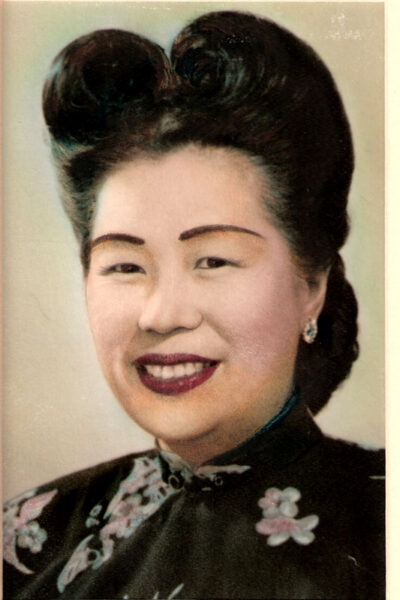
Marion Wong, a Chinese American born in 1895, worked as a singer in Oakland before moving to Hollywood, where she began acting. In 1916, at just twenty-one years old, she founded a film company called Mandarin Films. She is believed to have done so with the financial support of her uncle, Ben Lim, a wealthy merchant.
Also at the age of twenty-one, Wong wrote, conceived, acted in, produced, and directed the thirty-five-minute film The Curse of Quon Gwon (1916), alongside a cast of Chinese American actors. The film was inspired by Wong’s visit to China. Born and raised in the United States, she had never been to China before, and the experience left a profound impression on her.
Contemporary writers have described Wong’s film primarily as a love story, but it also contains elements of fantasy. The story centers on a Chinese deity who, angered by what he sees as the corrupting influence of Western civilization on China, curses his own people.
One of the film’s most striking scenes features the protagonist, played by Marion Wong’s sister-in-law Violet Wong, wearing a necklace and bracelets that seem to transform into chains, as though they are magically imprisoning her.
The film’s perspective on the assimilation of Chinese Americans into American society makes it particularly significant.
You can watch the film at the link below:
In an article published in Moving Picture World on July 17, 1917, Marion Wong spoke about The Curse of Quon Gwon:
“I decided to introduce [the Chinese] to the world. First, I wrote a love story. Then I decided that people who were interested in my people and my country would want to see some of China’s customs and traditions. So I added many scenes depicting these things. I hope it will be successful.”
It wasn’t. Wong abandoned her film career and chose instead to raise her children.
Grace Cunard
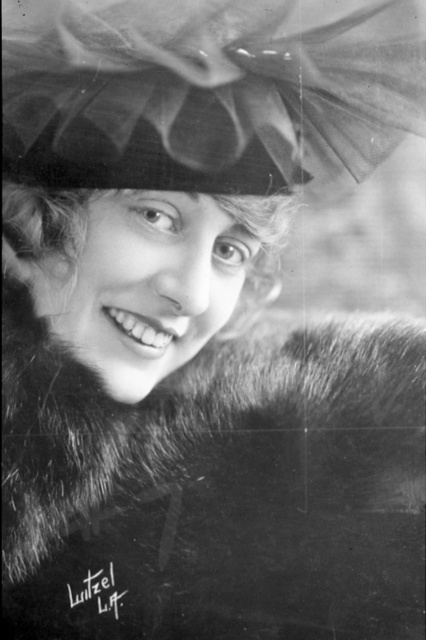
Grace Cunard, born in 1893, was a popular actress of the silent era and also worked as a screenwriter. At Universal, she worked alongside director Francis Ford, John Ford’s brother, as both an actress and writer. Between 1913 and 1917, she also co-directed five different projects with him.
In 1915, Cunard was interviewed by writer Richard Willis for Motion Picture magazine, where she spoke about her experience as a director:
“As to directing, I have done quite a bit of it. I work with Mr. Ford when he is cutting and assembling a picture. I don’t think I shall make it a steady occupation. Later, when I feel I am too old to play leading parts, I think I shall turn entirely to directing, for I shall never give up motion pictures; I am too deeply attached to them.”
Cunard directed the action-adventure serial The Purple Mask. The serial premiered in theaters in December 1916 and ran for sixteen episodes. Unfortunately, the six episodes she directed are now lost.
In fact, all of the films she co-directed are lost except the crime thriller Unmasked (1917) and the Western A Daughter of the Law (1921).
Featuring an Arsène Lupin–style gentleman thief and elements of mystery, Unmasked offers an entertaining take on the crime thrillers that were popular in novels and films during the 1910s.
The film also contains some strikingly cinematic sequences. In the opening scene, where the Man and the Woman meet, the camera slowly pulls away from a woman’s neck adorned with a valuable necklace, gradually revealing the hands of both thieves before finally revealing their masked faces.
You can watch the film at the link below:
Cunard also directed the short crime thriller Black Masks (1913), the murder mystery The Mysterious Leopard Lady (1914), and its sequel, Lady Raffles Returns (1916).
In the final years of her life, Cunard’s health was affected by several chronic illnesses. At the same time, as silent cinema gave way to sound, she experienced increasing obscurity and became increasingly disconnected from the film industry. For a long time, she was remembered primarily as an actress, while her considerable talents as a director, writer, and producer were largely overlooked.
She was also an expert in the format known as the serial—a form of filmmaking in which a new installment was released each week, typically ending at a moment of extreme danger, such as a character being trapped inside a burning building or about to be hit by a train, leaving audiences eager to return for the next episode. Cunard was among the filmmakers who helped popularize the cliffhanger, the technique of cutting a story off at its most critical moment. In this sense, we can regard the serial and the cliffhanger as important ancestors of the television series format that would emerge decades later.
Perhaps our greatest consolation is that, even if posthumously, Cunard has finally received some of the recognition and honor she deserved. One of the films she directed, Unmasked, was selected for preservation in the U.S. National Film Registry in 2014.
In 2018, film library and distributor Kino Lorber, Inc., in collaboration with the Library of Congress, released a special six-disc box set titled Pioneers: First Women Filmmakers, celebrating the many contributions women made to the development of the film industry during the silent era. The collection includes three episodes from Cunard’s The Purple Mask serial, originally released between 1916 and 1917, as well as a copy of A Daughter of the Law, the 1921 short film she directed and starred in.
The masked characters, secret societies, death traps, kidnappings, underground settings, and the recurring narrative of the “woman in peril—but never merely passive” that Cunard helped create would later become staples of Universal horror films and pulp horror cinema.
Ida May Park
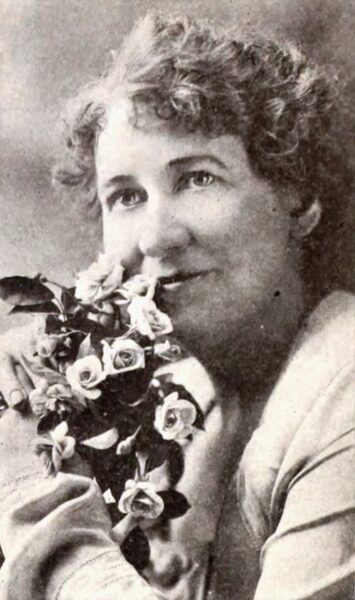
Ida May Park, a prolific Hollywood screenwriter, began directing her own screenplays in 1917. When Park’s husband, Joseph De Grasse, was unable to complete a film starring actress Dorothy Phillips, the production company hired Park to take over the project. She was already experienced, having worked on her husband’s films. After Lois Weber left Universal to establish her own production company, Weber Productions, Universal recognized her popularity and decided that working with another female director made good business sense. Park was chosen for this reason.
On May 17, 1917, Universal released Park’s feature-length thriller The Flashlight, in which Lon Chaney, one of the most beloved figures in horror cinema, played two roles: Henry Norton and Porter Brixton. Park adapted the screenplay from a story by Albert M. Treynor. The film was originally titled The Flashlight Girl, but the title was changed before its theatrical release.
Film historian and Lon Chaney expert Jon Mirsalis, who has researched the film, describes the plot as follows: The protagonist, Jack Lane, is a photographer camping in the mountains. He sets up a camera equipped with a flash to photograph an intruder approaching his camp. The resulting photograph reveals a girl walking through the night carrying a rifle. That same night, a man named Porter Brixton is found murdered in his cabin, making Jack the prime suspect. During his trial, the girl’s identity is revealed, along with several unexpected twists that ultimately expose the real killer.
The spectacular location footage in the Sierra Nevada mountains and the adventure-mystery storyline received considerable praise. Unfortunately, the film is now lost.
Park had this to say about women working as directors:
“I refused the first directing position offered to me because directing seemed entirely unsuitable for a woman. I don’t know why I thought so. A woman can bring to the work tremendous enthusiasm and imagination, a natural love of detail, and an intuitive understanding of character. All of these are considered feminine qualities, yet all are essential to a successful director.”
Park’s directing career ended in 1920. Ironically, that same year, in an article titled Careers for Women (1920), she argued that directing films in Hollywood was a legitimate and accessible career for women.
Author: Yasemin Akman